Thursday, July 20, 2006

The Destruction of the Sodomites


"'The day of the birth of Our Lord Jesus Christ was prefigured according to Saint Augustine and Saint Jerome by the fire of of Sodom, since all the sodomites in the world were annihilated on that night. The same Saint Jerome comments on Isaiah (VIII-X): "The light was so potent that it destroyed all those who engaged in that vice. It was the work of Christ. It carried out the extirpation of this filth from the face of the earth."' There is a mystery here. Modern research has found no source for the legend in the works of Jerome or Augustine, despite the specificity of the references, and has failed to trace it back beyond the early thirteenth century. But this fantastic and ugly fable, which turned the prince of peace and good will into a mass murderer, gained a powerful hold on the Iberian imagination. It was repeated in a theological thesis by a Cuban archbishop as late as 1860."
-Homosexuality and Civilization, by Louis Crompton, quoting from a 15th-century guide for inquisitors in Spain.


Fables and myth have the interesting advantage of embodying contradictions in symbolic form which, if they were stated rationally, in a form susceptible to logic, would be exposed as specious instead of appreciated as powerful images expressing ambivalences and conflicts. In the rhetoric of religion and politics, homosexuality is on the one hand completely unnatural and on the other so seductive that even the most confirmed heterosexuals have to be protected from it. The association of homosexuality with apocalyptic destruction is especially fascinating. Nobody knows exactly what fate it is that has to defended against by outlawing gay marriage, adoption by gay couples, a visible gay presence in the military--it seems incredibly bizarre that this hysterical movement has just given up entirely on preventing sodomy itself, which is all that really matters, just as they gave up earlier on preventing masturbation and birth control. The arguments are so confused I've never felt I could accept any analysis of them I've ever come across; I feel convinced that public defenses against homosexuality have to be rooted pretty deep in the unconscious, but theorists of "homophobia" usually seem to me to be conjuring up their own nightmare visions of the enemy--that is, homophobia and homophobiaphobia seem to come to the same thing (as do pedophilia and pedophiliaphobia). The most obvious relation between the dreaded sin of homosexuality (as in previous eras of witchcraft and various heresies) and the End of the World is simply that apocalyptic destruction stands in, in the unconscious mind, for "I don't know what": "If men get to fuck other men, then I don't know what." The thing is, that "I don't know what" has to be taken very literally: Why does one sin or another place the believer in the position, not just of expressing hatred or contempt, but of so entirely giving up any attempt at reasoning that they have to fall into the default position of "I don't know what," therefore: the future is blank or ceases to exist.

But this idea of the spontaneous destruction of all sodomites in a single night prefiguring the birth of Christ is something you can sink your teeth into. It of course invites a lot of the same kind of questions as any theological myth: If sin is that easy to eradicate, why not do it more often? If sodomites were eradicated in one night, why did they come back? And if they could, why bother eradicating them in the first place? But even more, I appreciate the idea of some kind of balance between the destruction of the sodomites and the birth of Christ; it makes one think about what Christ and the sodomites might have in common in the minds of believers. (Crompton also notes that in Italy as well as Spain, an interesting feature of the public martyrdom of sodomites is how much widespread sympathy it elicited, to the point where officials felt they had to intervene to soften the harshness of punishments.) It therefore suggests to me that the most dangerous aspect of a totalizing and comprehensive opposition to any sort of unreasoning prejudice, even at its most homicidal, is the failure to recognize the ambivalence at its root, and therefore the potential for altering apparently implacable conflicts. Why, after all, has religiously based anti-semitism all but disappeared in the Christian sects of the United States while it's become an even more dominant theme in Islam? It does no good to say it's "about" the Arab-Israeli conflict, in part because that just places the question at one remove instead of answering it. (I'm not denying the material sources of all important political conflicts; I'm just saying they don't explain away the accompanying ideologies and mass psychology of ideology.) It would be a mistake to put aside the question of how the most rabid anti-gay rhetoric satisfies homosexual impulses--especially in religious contexts.

Wednesday, July 19, 2006


News Flash

President Bush today vetoed the Senate's stem-cell research bill, flanked by hundreds of soiled Kleenex tissues, stiffened hand towels, and discarded tampons. "Each cries out eloquently to Americans never to forget the innocents who are wholly in their power. Let the enemies of the culture of life be warned."

Friday, July 14, 2006

Synchronicity


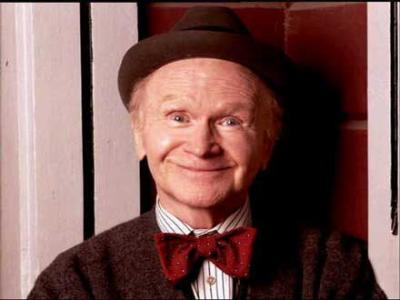
This morning when I sat down to look at the paper, I was holding in my hand a small red button with "UTOPIA" on it in white letters--from the V&A show on Modernism that's coming to the Corcoran. And the first thing I saw on the front page was a small headline reading: Red Buttons is Dead.

Tuesday, July 11, 2006

Saturday, July 08, 2006

Here's the story on Chris Moukarbel's film, based on an excerpt from the Oliver Stone 9/11 script, which has resulted in his being sued. It was his thesis project at Yale this year.


An Artist Releases a New Film After Paramount Blocks His First


By FELICIA R. LEE
Published: July 8, 2006
He's back. Chris Moukarbel, a New York artist who was sued by Paramount Pictures over a 12-minute video based on a bootleg
Oliver Stone film script about 9/11, has another video in a New York gallery exhibition that seeks to marry politics and art. This one was created from film shot in the process of making the video that led to the lawsuit.
Paramount filed suit in United States District Court in Washington last month saying that Mr. Moukarbel's original video, "World Trade Center 2006," infringed on the copyright of the screenplay for Mr. Stone's $60 million film "World Trade Center," scheduled for release in August.
"I'm interested in memorial and the way Hollywood represents historical events," Mr. Moukarbel said in an interview yesterday, the day after his new video was shown as part of the group exhibition "Data Mining" at Wallspace, a Manhattan gallery. "Through their access and budget they're able to affect a lot of people's ideas about an event and also affect policy. I was deliberately using their script and pre-empting their release to make a statement about power."
"My film was offered free on the Internet," he said of "World Trade Center 2006." "It cost $1,000 to produce. We're at a place now where technology allows the democratization of storytelling."
After a temporary restraining order was placed on the distribution and showing of his video (part of a thesis project for his Master of Fine Arts at
Yale), Mr. Moukarbel went ahead and produced another for Wallspace. For his new 13-minute video, he used film of the two actors in the first video while they were waiting for direction and getting into character. It has no dialogue except for the banter between the actors and off-camera direction from Mr. Moukarbel.
Mr. Moukarbel, 28, who graduated from Yale in May, said his new video was intended to capture the art of performance and to serve as commentary on his plight. "I had to put together a project to reflect on the old project but also stand in its own right," he said.
Chris Klatell, a lawyer for Mr. Moukarbel, said yesterday: "We've reached a settlement in principle with Paramount that we hope to finalize. Chris is in full compliance with the temporary restraining order. The new video doesn't have any dialogue or any elements of the 'World Trade Center' screenplay."
Spokesmen for Paramount could not be reached for comment yesterday.
Wallspace has addressed the controversy by mounting on a wall the text of a press statement by Mr. Moukarbel explaining his ideas about his work, the genesis of his project and his legal adventure.
Janine Foeller, the co-owner and co-director of Wallspace, said the curator Joe Scanlan had intended to put Mr. Moukarbel's first 9/11 video in the show. "We're happy and willing to show Chris's work," Ms. Foeller said. "It's taken on another life of sorts."
Mr. Moukarbel admits that, for the first video, he used a bootleg script. Mr. Stone's film focuses on the ordeal of two
Port Authority of New York and New Jersey police officers, Will Jimeno and John McLoughlin, who survived the World Trade Center collapse.
In March, Mr. Moukarbel created a Web site,
pointsofdeparture.net, for the video. Other sites, including filmthreat.com, began to take notice. The question in cyberspace was whether his first video was valid commentary or a rip-off of Mr. Stone and the movie studio. Many e-mail postings sided with Mr. Moukarbel.
"I would have been bummed if they hadn't noticed," Mr. Moukarbel said of the executives at Paramount. "But I didn't expect to be sued."

Monday, June 12, 2006

The reason A Prairie Home Companion works so well for its subject, the reason it's an unusual movie, the reason it's a typical Altman movie, and the reason critics have been more or less condescendingly calling it endearing rather than just recognizing that it's a really good movie, all come down to the stranglehold the standard three-act structure has on American movies. While most movies derive from Ibsen, Altman's derive from Chekhov; not only are their plots and characters diffuse, but they have that same seriocomic spirit and unfamiliar acceptance of everything that make Chekhov popular with actors and a little scary for most audiences. No matter how big the project, Altman's movies are always modest in aim; he's never wanted to make a great movie featuring great performances that will knock everyone's socks off, and that makes him very hard for film reviewers to really get. They treat him like an eccentric uncle because they don't get that the rejection of greatness is a pretty great thing.
John C. Reilly has such a beautiful voice you have to wish somebody'd write him a musical.

The Faculty Room, at Wolly Mammoth, is not great and does not work. There's sort of an amusing bit in it in which a sock-puppet Holden Caulfield has a dialogue with an English teacher and, eventually, a sock-puppet J. D. Salinger. The thing is, it only reminds one that Holden is right: most people are phonies, and that sucks, and people really ought to try to make some kind of commitment to being truer to who they really are. The Faculty Room seems phony because everything in it seems contrived to have its effect, including the invocation of the popularity of the Left Behind books. It's evident that the play is trying to use the Rapture in the way Angels in America used angels, but it comes off as just a device to make something happen. The central line of the drama futzes around on the topic of teachers sleeping with students, but it just makes the appeal to conventional morality seem squalid and unimaginative.

This week I've got to finish a conference presentation on The 5000 Fingers of Dr. T to give in Massachusetts next week and I'm way behind. I'd like this to be the core of an article or even book I've had in mind for at least five years. I'll also be working on stuff for the dreams and education book. After the conference Art and I will be in Provincetown for a week, so it'll be July 4 before I'm back and trying to get back on a writing schedule. When I get a chance I'm going to write some on what I learned by doing the Sex and Cinema course this summer; I want to throw together a couple of book proposals and see if I can get a project going (on dreams); and I've got fall preparation to do. But i'm hoping to get back to some other writing in July and August.

Thursday, April 20, 2006


The Latest on Sex in Cinema

So once again, I'm figuring out how to fit this into 12 sessions, but I'm trying to articulate some principles--not only movies I think are cool, but following a theme. I'd been thinking the idea here is Conformity and Repression, Rebellion and Subversion. Sometimes the best theses are sort of obvious, and it seems to me it makes sense to emphasize how American representations of sex, in popular culture and in politics, are founded in essentially puritan notioons of orginial sin. New populations, new media, new artforms, new belief systems arise, but that is the currency they deal in, so they adapt only in terms that fail to escape the prevailing ways of framing the cultural questions around sex.
Now, I like this approach because it gets at what's American about American movies' ideas about sex; because it allows us to focus on sexual behavior and how it's represented, instead of taking sexuality as a mere instance of gender identity and relations; because it allows me to ground the course in a few basic instances I particularly like, especially Bill Condon's film Kinsey (along with the cultural politics of serious biological, sociological or historical study of sex) and Michael Warner's book The Trouble with Normal; because it puts the hetero/homo division, along with fetishisms and paraphilia and the whole question of what Americans do and don't consider sex, consider racy, and really enjoy and fear in representations of sex, in a more interesting light than either politics or Freudian views; because it sets me up personally to come back later and discuss the garden-of-Eden fantasy in relation to Melanie Klein's ideas about sex and aggression; because it seems to me to place issues of genre and sexuality in an interesting light (as with film noir, horror, and farce especially); because it gives me some kind of ground for distinguishing between the commercial cinema, porno and the adult film industry, and avant-garde and experimental film, on a kind of ideological as well as purely descriptive basis; and because I think it provides the ground for interesting choices in readings.


So that is kind of where I am today, and it leaves me choosing from among the following films, I think
Introduction to the course:
Kinsey
with Sex Ed Videos from the 1950s, with excerpts from The Subject is Sex, Heavy Petting, Everything You Always Wanted to Know About Sex
If I decide to cover the early establishment of sexual themes in melodrama in silent film it might be with
Broken Blossoms, Our Modern Maidens
To establish the difference between American and European representations of sex:

Pandora's Box

For the importance of star persona and celebrity:Marlene Dietrich (Blonde Venus), Mae West, Marilyn Monroe


I want to do something on the erotics of the musical: The Gang’s All Here, with Busby Berkeley numbers, and the documentary on Carmen Miranda, Bananas is My Business. This covers star persona and exoticism of culture and race as well.


For melodrama on the theme of repression in "middle America": All That Heaven Allows (women and children)
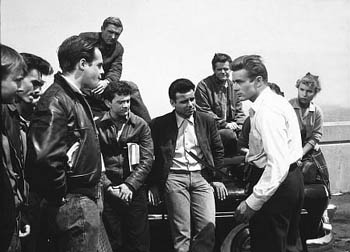
Rebel Without a Cause (teens, homoeroticism, "homosociality" and triangles)
Blue Velvet
For farce on the same theme:
The Miracle of Morgan’s Creek

Pillow Talk, The Thrill of It All, or Man’s Favorite Sport

Back to the Future (great Oedipal stuff there, a good place to cover Freud)


On sex and power:
The Apartment, Secretary, Some Like It Hot (as well as Sunset Blvd.)


On the film noir "myth" of repression, erotics, and violence:
Postman Always Rings Twice, Double Indemnity, Sunset Blvd.


On the same issue in other genres:
Duel in the Sun / Lust in the Dust, Invasion of the Body Snatchers, Carrie, Psycho, Bonnie and Clyde, Scream (as pastiche)
Boys Don't Cry (with The Brandon Teena Story)
The "erotic thriller":Basic Instinct


How homoerotics is represented:
Top Gun, The Gay Deceivers, The Celluloid Closet, Poison, Postcards from America


How race is read as sex and vice-versa: Mandingo, Foxy Brown, She’s Gotta Have It
Porno: Inside Deep Throat, with some interviews with Adult Stars and early porn; Pornography: The Secret History of Civilisation (British documentary)
Avant-garde: Trash, Curt McDowell shorts, Thundercrack!, Blow Job, Sins of the Fleshapoids, Scorpio Rising, Flaming Creatures, A Dirty Shame. I'm surprised and pleased at how much stuff I've got on this topic, so I want to do it right.

To establish differences between American and other ways of representing sex, I'm thinking about: The Dreamers, Last Tango in Paris, Belle de Jour, and Happy Together, but especially thinking of showing Y tu mama tambien or Law of Desire.
Some of these are pretty indispensable to me; the others I need a couple more weeks to mull over. I'm working on the readings now, and in some instances I may choose a film on the basis of whether I can find a good reading to go with it. I'm still thinking these over as possible required texts:

Warner, Michael. The Trouble with Normal

D’Emilio, John, and Estelle B. Freedman. Intimate Matters : A History of Sexuality in America

Dyer, Richard. Stars. McNair, Brian. Mediated Sex : Pornography and Postmodern Culture.

Money, John. Gay, Straight, and In-Between: The Sexology of Erotic Orientation

Poulson-Bryant, Scott. Hung : A Meditation on the Measure of Black Men in America.


There really isn't a reasonably short introduction to the critical study of film I can throw in, or I would. I have a lot of essays collected for reserve readings. That's it for now.

Wednesday, April 12, 2006


Ladies and gentlemen, I give you . . . Shorty!!!
Shorty used to be Chris Moukarbel's cat. Now she's ours.
She is, I think you can see, adorable.
She is also deep. The little wheels are always turning, the grey matter percolating.
Shorty has had an immediate and dramatic effect on the whole dynamic here.
If there were a novel about this household, I'm afraid it's clear who would be the central character.
Shorty--she's a cat and a half.

Tuesday, April 11, 2006

Bernard the Blue-Nosed Reindeer

I'm at St. Mary's--although it doesn't look like St. Mary's. I'm going to meet up with some people at a swimming hole; a young woman is giving me a ride. They seem to be the people I went to school with at Hopkins. In the water, I'm aware I'm wearing contacts and shouldn't get water in my eyes. I can see my own body from above, through the water; I'm impressed I can see the definition of my abs and pecs and think I'm really not far from having a good body. I'm naked; so are some of the other swimmers but not all. There are two young women wearing Mennonite or Amish caps wading in shallow water in full skirts. The water seems to be draining away, and now I'm not in a swimming hole but an artificial pool. The water is lower on one side than the other, as if it's tilted. When I stand on my head in the water, there's hardly enough water to cover my eyes and nose; I can still breathe through my mouth.
There's a black preacher handing out pamphlets. I shake my head and think that's the end of it, but he starts a religious service. The swimming pool is now a large room, like a gym. He's going to start reading from the New Testament; we all have copies in front of us. My copy is open to the Book of Jonah in parallel Hebrew and English. I say aloud, "I can read Hebrew," in a joking manner. One of the man's two young sons steps forward and reads aloud in Hebrew--not well, haltingly, but he reads it. Then he pipes up, "I can read Hebrew," just as I did.
The boy and his father produce some candies wrapped in colored foil. The boy places a blue one in my hand, then splays out the end of a red one and puts it on my nose. He looks at me, then removes the red candy from my nose and replaces it with a blue one and sings,
"Rudolph, with your nose so blue,
Who'd have thought you were a practicing Jew?"
March 18 2006

Saturday, April 08, 2006

My Mother is Dying Again

My mother is dying again. She is in her bedroom in the old house--the one that burned down in the '70s. She keeps falling out of bed and I have to lift her up and get her back into bed. I talk to Art about this: "She already died, didn't she? I mean, we buried her." He says, "Yeah, I didn't want to bring that up. I thought we did, but now I'm not sure."
At the same time, I've lost the car. But it also seems like it isn't me that lost it; it was borrowed by an older relative who lost it, Junior from The Sopranos or Sophia from Golden Girls, someone who's supposed to have senile dementia. So I have two things to discuss with Art, my dying mother and the lost car.
Back at the house, I ask my mother how it's possible for her to be here when she's already died. She becomes much younger suddenly. She has in her hand a black stone figurine that's supposed to be from ancient Mesopotamia and says she is never going away. She appears very happy about this but I am troubled; there's something supernatural about this that bothers me very much. A naked man appears in the doorway to the bedroom, looking very embarrasssed; a naked woman peeks over his shoulder behind him. "You wouldn't have any condoms, would you?" he asks. I say no; I'm irritated with him for interrupting. When I come out of my mother's room, he's sitting fully clothed in another bedroom, with another man seated in a chair near him. His name is Derrick but I call him Rick. I ask if he knows anything about possession. He says no, but the other guy starts to mumble, "I had a dream once . . ."
March 17 2006

Thursday, April 06, 2006


I go to some weird shit sometimes. Among the weirdest shit I've seen is Hot Feet, the Earth, Wind & Fire musical. I vaguely remember Earth, Wind & Fire as associated with the bad kind of disco, the kind that seemed to have very little to do with drugs or illicit sex.
Hot Feet appears to begin with the character Blossom from the late-80s TV show wandering through Taxi Driver. (There's a fine line between Jodie Foster and Mayim Bialik, really.) She runs into some creatures who have escaped from either The Lion King or Ionesco's Rhinoceros plus, I think, Debbie Allen in Dorothy's ruby slippers. The audience is enjoined to "boogie," which, I find to my surprise, is actually easier while seated than standing up--or maybe I'm doing it wrong--is it anything like Kegel exercises? After that, it's kind of a really bad version of The Red Shoes performed on the set of Fame, with a little bit of the Sparks notes for Faust and some Oedipus, or Iphigenia at Aulis, or something. And Soapdish, without the funny parts.
I used to dance (they gasp) and it's always a little weird for me to see the mythology of dance in recent popular entertainment. I get the dance-off thing, I get Footloose, but when did dance become a kind of desperate high-stakes struggle? Bob Fosse has a lot to answer for. Why do the unnatural, forced expressions of ecstasy on the dancers' faces seem to mask an implacable hostility toward the audience, and a profound despair at their condition in life? Dance is deep, deep, deep. My suggestion for a tagline: Hot Feet - Because Moulin Rouge went way over your heads.
I am waiting for the sequel: Hot Nuts.

Tuesday, April 04, 2006


I Am a Dirty Rotten Scoundrel
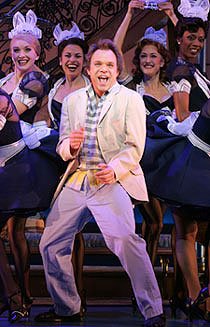
The last matinee of the Broadway musical Dirty Rotten Scoundrels has just ended and I am going on as the understudy for the co-star, Norman Leo Butz for the last evening performance, the last show. Apparently, he's never missed a performance and there's some rule that the understudy has to go on once and now I have to do it. I haven't taken this very seriously so I don't know my lines or the musical numbers. Suddenly it strikes me that what he has to do is really complicated and I can't just fake my way through it by doing what everyone else is doing. I have had dental work that day and it sounds serious but really hasn't hurt very much; still, I decide I am going to get out of it by saying the dental work makes it impossible for me to sing or speak on stage. (At the same time, I am frantically riffling through the script.) But I put off calling, and although the people I'm with don't have a real problem with my faking my way out of this, they are starting to get upset that it's 6:30 and I haven't called in yet, since the curtain's at 8:00. I get the impression it will basically be OK because although the understudy has no understudy, in a situation like this, they can list the actor as the understudy to the understudy. Norman Leo Butz will go on after all, as he wanted to all along.
(BTW: The use of "Butz" kind of screams out at you, doesn't it, but in the dream there's also this obscure sense that Norman Leo Butz may also be called Norman Bates.)

Sunday, April 02, 2006


You really want to know what I'm writing? I just finished the first draft for my section on film and literature in the book proposal for Dreaming in the Classroom, which I'm co-writing with Kelly Bulkeley and Phil King (God bless 'em for getting me to actually to do something that might result in publication). I know you will find this f a s c i n a t i n g.
The photo is by Ralph Gibson.

Draft: Film and Literary Studies (BW) – 4-3-06
Literary studies of dreaming may begin with myth, folklore, and biblical criticism, and thus address the same cultural and psychological issues as the anthropology of dreaming. Folktales and religious scriptures featuring dreams set the models for later literature, from medieval dream visions to surrealist poems. The range of possible objects of study is extremely wide, and in offering some suggestions in our chapter on this topic, we try to focus on texts from different cultures and periods that are accessible, available, and perhaps most importantly, short enough to be actually read by your students.
In his introduction to The Dream Adventure (Orion, 1963), Roger Caillois identifies two main approaches to literary dreams: the psychological, which seeks an interpretation applying to the psychology of character or author (or by extension, to the group psychology of a society), and the philosophical, which uses the dream as a device to illustrate a metaphysical issue, or perhaps more properly, considers the genuine metaphysical questions raised by dreams. Contemporary classes may learn from Freudian or Jungian theories, apply the lessons of Gestalt therapy or Montague Ullman’s dream-appreciation seminars, or extend the horizon of topics from Western to Eastern literature, but the fundamental division in method remains the same. The psychological approach treats the dream as a coded message like others in the literary text to be decoded through the critic’s favored method; the philosophical approach may be more conducive to post-structuralist approaches like deconstruction, as it invites continual reconsideration of the ontological status of both the dream and the text. (Just think of Alice’s position in her underground adventures, trying to figure out whether she is actually dreaming, and the enduring appeal of the philosophical approach even to untrained readers is abundantly clear.) Both are of obvious relevance to contemporary classes in literature, especially when so many have branched out into popular culture, cultural studies, and alternative media, all of which present new contexts for dreams outside of traditional literary genres. (A third approach, which treats the literary dream as historical evidence, can add fascinating conundrums and new interest to history courses, particularly in periods when the dream vision is a prominent form as in the European Middle Ages.) Increasingly, instructors who invoke psychological theories in their teaching of literature must be prepared to offer the relevant accounts not only of depth psychology such as psychoanalysis, but also of contemporary brain science, mind-body philosophy, and cognitive psychology.


What is true of literature is, in this case, anyway, true of film, where the lessons of cognitive psychology are only beginning to be integrated into critical study. A limited number of courses on dreaming and cinema have been taught in the United States. Those initiated by psychology departments or instructors have emphasized the interpretation of dream sequences as revelation of character—as, perhaps most famously, in Ingmar Bergman’s masterpiece, Wild Strawberries. But courses developed by film instructors are more likely to broaden the focus beyond the psychology of character to consider dreams in relation to the many issues raised by the genres of fantasy, children’s film, and most recently, the spate of metaphysical fantasies such as The Matrix, Eternal Sunshine of the Spotless Mind, and Waking Life that testify to an unprecedented interest in dreaming among filmmakers and the general movie audience. Nearly every specialist on film has encountered the idea of the cinema as a form of collective dreaming. The difference among instructors is primarily in how they choose to investigate this analogy. Those who adhere to a realist theory that characterizes film essentially as a means of faithfully recording the objective world will treat cinematic dreaming as an interesting special case; others may find that films featuring dreams and dreaming consistently pose provocative challenges to realism.

Clearly, the fundamental topics in which dreaming can be of special interest in courses in literature and film studies are: the unique access that dreaming offers to the study of symbols generally; the models, derived from the theories of Freud, Jung, and other psychologists (including traditional non-Western sources only now becoming familiar in the United States) for understanding how dreams express the relation of the individual to the world; the genuine metaphysical questions raised by dreaming as they appear especially in self-reflexive texts; and the endlessly fascinating question of the relation of dreaming to the roots of imagination and creativity generally.

Dreaming may be not only an object of study but homework in a class in literature, film, or any of the humanities fields. Beginning (to the best of our knowledge) with Richard M. Jones’ courses at Evergreen State College in the 1970s, as described in The Dream Poet (Schenkman, 1979), many teachers of literature have found that asking students to keep a dream journal and raise their own dreams in class fuels their imaginative impulses and fosters a subjective identification with authors and characters that results in eager, engaged and creative interpretation of literary texts. Composition and creative-writing teachers have long found that dream-based assignments not only often result in an unlabored, unself-conscious that breathes new life into student writing, but also encourage active and empathetic listening when writing is shared in class.

Tuesday, March 28, 2006


Brandon Flyte is a high-school student in Oregon who recently made a film for a class assignment. He chose to do a take-off on Brokeback Mountain called Brokeback High. (That's him above playing the jock--the high-school equivalent of a ranchhand--in his film.) He removed a short scene in which the two leads "snuggle" shirtless as the teacher deemed it violated the assignment's prohibition of "nudity." But he showed the film to another class and was expelled for "insubordination," but was soon readmitted, under circumstances that are a little unclear. (A local news story claims that he lied on his website about the circumstances of his expulsion.) You can find the story and the "snuggle scene" on his website. Brandon is straight.

Saturday, March 04, 2006


I got some comments on the post about teaching Sex in America Cinema, so here's more:
I have like 10-12 films I can show. The list I posted of 40-50 was already pared down a bit and obviously, what I need to do is figure out how these films can create "units" on topics it makes sense to me give priority to. For what I'm thinking of--heterosexual courtship vs. marriage--Rear Window works better than Vertigo. I don't really like Eyes Wide Shut or Last Tango in Paris, but I'd probably use excerpts from them, as I will from some of these other films, including Salo, maybe I am Curious (Yellow), In the Realm of the Senses--because it is a course on American cinema, and I'm bringing in foreign films, especially of the '60s, only as an influence on American culture and films. I might use some subterfuge to bring in Y tu mama tambien, very likely in contrast to an American film like The Last American Virgin, American Pie, or one of the other countless who-can-get-laid-first-or-most comedies from the '80s to the present. (I have a real soft spot for Porky's.) And at the moment, I'm thinking I'll ask students to analyze a film we haven't had time to see in class, so I don't want to show everything there is.
I am very, very interested to see--after researching this some--that there's really no book out there that attempts to survey this area. (There's one coming out in Britain this week.) There are collections of essays on the topic (like Robin Wood's or Laura Kipnis's), and books on particular issues (like Linda Williams' excellent survey of straight pornography, Hard Core). But not a book--I don't have time to review the articles--that attempts something like a typology, a general consideration of the relation of cinema to sexual behavior, something that connects social history to film theory.
I posted a query at a listserv I belong to on film studies and the response was interesting. I made the mistake (well, it isn't actually a mistake) of saying I'd like to do more than gender studies and was berated--one of the respondents called it a "pile-on": why was I so determined to ignore gender studies? Clearly I did not understand that the whole question of sexualty could be reduced to gender performance theory. Yeeesh. So this is why I'm not really an academic, or a critic, or whatever these people are who, at the age of 26 or so, have the answer to everything.
I swear, I just get meaner and nastier every year.
My research is pretty haphazard. After receiving a solicitation from Deep Discount DVD, 3 films for $20, I added a fw others to the list. For one thing, it reminded me of Foxy Brown, which I'm thinking I can add as a comparison to Mandingo.
By the way: Matt Langley, I don't know how to find you. Where'd your blog go?

Tuesday, February 28, 2006


This comes verbatim from Towle Road, a good blog:

A noteworthy if sad junction of events happened last week. It was the release of some FBI memos regarding the treatment of prisoners at Guantanamo Bay, and the announcement that
seven paratroopers from the 82nd Airborne Division would be charged with engaging in sex for money on a website.
Here's one
revelation from the newly released memos:
"Military interrogators posing as FBI agents at the U.S. detention center at Guantanamo Bay, Cuba, wrapped terrorism suspects in an Israeli flag and forced them to watch homosexual pornography under strobe lights during interrogation sessions that lasted as long as 18 hours, according to one of a batch of FBI memos released Thursday."
And here's a point brought up in
an opinion piece just published in The Nation.
"This confluence of events presents the unlikely but completely plausible scenario in which 1) military boys star in gay porn which is 2) subsequently used by military interrogators in Guantanamo to torture prisoners in violation of international law then 3) these same military boys are prosecuted for acts which are perfectly legal under civilian law but remain punishable offenses under a silly and discriminatory set of military policies while 4) the torturers and their supervisors get off totally scot-free. Ain't that America."


This also from The Nation:
Early this month, the Defense Department admitted (in a letter to the
Senate Armed Services Committee that its TALON (Threat and Local Observation Notice) surveillance program engaged in "inappropriate" domestic spying on anti-war groups. As NBC News reported late last year, military intelligence labeled UC Santa Cruz's Students Against War a "credible threat" after they shut-down a recruitment visit and returned a few months later to
spy on a kiss-in against the military's Don't Ask, Don't Tell policy. Likewise, the FBI spied on a demonstration against military recruiters organized by NYU's OUTLaw. The Servicemembers Legal Defense Network (along with the ACLU) has filed a lawsuit requesting more information on the program and its impact on LGBT organizations.

Saturday, February 25, 2006


So I'm going to be teaching this course on Sex in American Cinema at St. Mary's for three weeks in May. There's already buzz and apparently all but a guarantee of high enrollment. Now I have to figure out what approach to take, and what to include.
All I know so far is I don't want to do this as a run-down of standard contemporary gender theory, but instead try to apply actual empirical, scientific, and social study of sex and sexual behavior to understanding films, their depiction of sexual relations and relationships, and their impact on ideas and behavior. I guess what I'm looking to break out of is the unconsciously puritannical strain that relentlessly seeks to substitute the social for the actually sexual in all studies of sexuality in art and culture. In the back of my head I suppose I'm also looking at it as a way to test my problem with Freudianism--the primary notion that cultural productions start with a sexual impulse, the basic concept of libido. (A lot of post-Freudians are more sophisticated than that, but still retain the basic assumption in the structure of their theory.)
This is the course description I gave them:

Cinema and sexual life have evolved together in the United States for a hundred years, and it’s impossible to say which has led and which has followed. From early instances of the screen star as sexual ideal in the 1920s, through the effect of drive-ins on sexual activity among teenagers in the 1950s, to the contemporary depiction of gay characters and love affairs, the movies have not only reflected Americans’ attitudes about sexuality but actively taught us what to believe, denounce, and accept. Gender roles and sexual relations are so central to narrative cinema that in a real sense the history of American cinema is the history of sex in America. To comprehend this subject, we will study both the social issues that have affected sexual behavior in America and the essential strategies in film studies that help us understand how films communicate ideas. Selected topics: Comedy and Courtship; Melodrama and the Power of Female Sexuality; Star Image and Sexual Scandal; Metaphors of Sex in Film Genres (Film Noir, Horror, Science Fiction); The Adult Video Industry; Race as Sexuality; Sex and Violence; Sexuality as Subversion.

I'll probably add a couple of topics to that. I'm interested to see if I can find a way to present hetero- and homosexuality as complementary instead of mutually exclusive; and to discuss non-sexual same-sex relations, because that area is so confused; and I want to get into the cultural creation of the teen-ager as a sexual category. Also, maybe, the not-so-subtle paradox underlying the defense-of-marriage debate. The clearest way I can put this, I think, is: What we often hear is that the opposition is about defining what marriage is for as a social contract: Marriage must be defended from dilution of its purpose of channeling reproduction (and thus sexual behavior) for society vs. marriage is essentially a monogamous affectional bond that can serve society. What this occludes is that marriage is being presented both as the acme of sex and where sex goes to die. That paradox, which may be a way the culture finds of expressing an important truth about both sex and society, is actually more interesting than the opposition the society creates in order to promote two equally unrealistic and counter-productive political positions. (At this point, promoting gay marriage has gotten as boring as fighting against it, though still not as criminally stupid.) That may also help get to the special position that the '50s seem to occupy in Americans' view of cultural representations of sex--which may just be a matter of the social power of the baby boomers. (That kind of thinking--the '50s as a state of mind rather than an historical period--is the kind of sloppy but pretentious thinking that might absolve me of the responsibility to offer any serious chronological study of cinema or of sexual behavior.) Anyway, it ought to a good place to explore the idea that cinematic representation by its nature has a dialectical relationship with the realities of the society, which is probably the idea that matters to me most, as a way of shifting the emphasis in the wrong-headed ways I think people use to look at art.

I am only just starting to think about what I might have them read. My initial search for stuff specifically on cinema and sex has been disappointing because the stuff has been dogmatic and not really about sex at all, quite often. I know I'd like to use The Trouble with Normal, because it sets out the issues about cultural attitudes so nicely, just as I know I want to start with the film Kinsey, because it helps define America's troubled relation with both sexual behavior and the representation of sexuality. (The very fact that a lot of people who talk about sex in cinema fail to start with this distinction indicates the problem I have finding stuff that will halp set the terms I want to use.)

But what do you care? You're wondering what movies I'm thinking of using. This is my A list:

All That Heaven Allows
Basic Instinct
Bonnie and Clyde

Boys Don’t Cry (with The Brandon Teena story)

Broken Blossoms
Chinatown
Duel in the Sun
Inside Deep Throat (with Rated X – A Journey Through Porn)
Kinsey
The Lady Eve
Mandingo
Mildred Pierce
The Miracle of Morgan’s Creek
The Opposite of Sex
Pillow Talk
Play Misty for Me
Poison
Postcards from America
The Postman Always Rings Twice

Rosemary's Baby
Show Girls
Some Like It Hot
The Terminator (with Back to the Future – Oedipus)
Top Gun
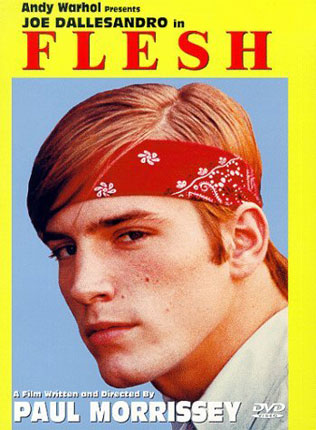
Trash, Flesh, or Heat
Y tu mama tambien
Your Friends and Neighbors

I can only fit in 10-12, even if I squeeze in a couple of double features. My B list:


40-Year-Old Virgin
A Dirty Shame
A History of Violence
American Beauty
American Pie
Before Night Falls
Before Sunrise
Blue Velvet
Bob & Carol & Ted & Alice
Boogie Nights
Carnal Knowledge
Closer
Double Indemnity
Eternal Sunshine
Far from Heaven
Fast Times at Ridgemont High
Faster, Pussycat! Kill! . . . Kill!
Friday the 13th
(or one of the series)
Gilda
Happiness
Happy Endings
His Girl Friday
It Happened One Night
L.I.E.
Lust in the Dust
Me and You and Everyone We Know
Midnight Cowboy
Mysterious Skin
Porky’s
Primary Colors
Psycho
Rear Window
Red River
Risky Business
Rope
Salo
Scream
Send Me No Flowers
Sex, Lies and Videotape
Shadow of a Doubt
She’s Gotta Have It
Stagecoach
The Basketball Diaries
The Butterfly Effect
The Doom Generation
The Dreamers
The Fluffer
The Idiots
The Road to Bali
The Thrill of It All
Thundercrack!
Velvet Goldmine
Vertigo
Wag the Dog

I just found a compilation of '50s-era sex-ed films on eBay which should be a great addition. The reason I'm thinking of a few foreign films is by way of contrast, to establish the conventions of American film, but also to go into how "exotic" came to mean "sexy"--just as "explicit" means "filthy" now.
By the way, my search for films for this course on imdb.com led me to I'm a Dirty Filthy Cocksucking Cunt! Why is it all the good titles are taken?

Now I'm going to get to work on what to read.
The rest of the time right now I'm focusing on course preparation, the talk I have to give on Whitman's "The Sleepers" at a conference in March, and the work I'm supposed to be doing for a book on dreams and education I'm working on with Kelly Bulkeley and Phil King from the International Association for the Study of Dreams. Gary Kornblau has something in store for me but I don't have time to get started on it yet.

Friday, January 20, 2006


I've been in Canada; I've been putting my spring classes together; I've been sick. When I get it together, I'm going to start writing a bit here about my plans for a Sex in American Cinema course at St. Mary's College in May. Meanwhile, I don't have to say anything at all about Brokeback Mountain, because Mark Simpson, who is as practically perfect as his compatriot Mary Poppins, has said it all already. Mark Simpson invented the term "metrosexual" and here he outdoes it with "retrosexual" (yum) and "fauxmosexual" (and you know who you are). At first it may appear that he's just complaining that we don't see Jake and Heath doing it--and he has every right to complain, God knows--but instead, he is, as he often does, pointing out the obvious that everyone ignores: Brokeback Mountain is about acceptable styles of masculinity, and avoids its ostensible subject of sex almost completely.
I love Mark.
By the way, the image of Brokeback recast comes from a Chinese website, and I have no idea what the context is. But I find I get kind of a charge out of it.


LONESOME METRO-COWBOYS
By Mark Simpson

Is there a support group for people who didn't like BROKEBACK MOUNTAIN? We must, if the rave reviews and newspaper reports are to be believed, be a very tiny - not to mention vulnerable - minority. Am I dead inside because I didn't experience the torrent of emotions I've been reading about in newspapers and in movie forums? Am I as emotionally crippled as Ennis because I didn't blub and hug after sitting through this `visceral' movie, but instead wanted to go and `help with the round up'? Am I suffering from internalized homophobia?

Probably all of the above. But this doesn't mean that this film which has become a phenomenon, isn't as tedious, mawkish, lifeless, unconvincing and bizarrely hypocritical as I found it to be. I wish now that I'd left after the first 15 minutes with the two bored, gum-chewing teen girls in front of me at the multiplex and gone shopping with them for the latest Westlife album instead. There would at least have been more sex.

OK, so there's a hurried joyless near-rape in the dark at the beginning, but we've seen all that before in more detail in prison movie films like SHAWSHANK REDEMPTION. Although true to Annie Proulx's original short story, this, the only sex scene in this `love movie' seems to owe more to director Ang Lee's awkwardness and impatience about MANSEX than Ennis'. This filmic essay on homophobia and its terrible toll goes out of its way to shield us from what it is that these two men have together or what it is that they do when together - or why they would bother to go to the trouble of trying to relive it every year for decades. Across thousands of miles.

Even when they kiss, it's carefully shot so that we never really see them kiss, the shadows in the tepee artfully falls across their mouths, or if somewhere better lit they appear just to be pushing their faces together, lips and teeth gritted. This makes the scene in which Ennis' wife spies these desperately `closeted' guys `kissing' outside her home all the more unconvincing and ironic. The realisation suddenly hits her: `Omigod! My husband is a fauxmosexual!' No wonder she's distressed.

Their boss also clocks the lover boys from a distance. But why their boss would assume they were queer because they liked to wrestle with their tops off rather than wannabe Abercrombie and Fitch models I don't know; maybe he had special binoculars. But I have to say that I sat right at the front of the theatre and I'm still not really sure what the hell they get up to on Brokeback Mountain. They don't talk much. They don't shag. They don't kiss properly. As Ennis' wife complains, `You go fishing but you don't bring back any fish.' The film tells us they're lovers. Insists that they're lovers, goddammit. But fails utterly to show it.

Perhaps I'm merely a jaded homosexual. Perhaps I've seen too much. Perhaps it's absurd of me to expect a proper snog between the lovers in a `love film', especially in a film that is telling us over and over again in painfully didactic fashion how bad homophobia is and a film which has been trumpeted for it's `courage'. But in the small provincial town in England's equivalent of Wyoming where I now live, I've several times seen (or rather stared at) drunken young soldiers snogging one another, `for a laugh', tongues and everything, in the middle of crowded pubs, much more convincingly, passionately and lingeringly than these actors who have been told by a thousand interviewers how `brave' and `committed' they were to do these scenes.

But then, there's not much realistic about this film. Even the impassively beautiful Wyoming countryside seems to have been wrapped in cellophane and Brokeback Mountain a big ribbon bow stuck on top of it. The boys are also very appetising, but while Heath Ledger turns in a fine performance with an almost impossible script and bloodless directing, both of them are too pretty - Jake Gyllenhaal in particular, lovely as he is, looks too metropolitan, too confected, too DETAILS fashion-shoot with a Western theme. By the time he reaches the 70s he looks he like the cowboy out of the Village People: the same haircut, the same black moustache, the same Stetson. But maybe this shouldn't be so surprising since the cowboy from the Village People, I discovered later, was the `gay cowboy consultant' on this metro-cowboy movie; very Queer Eye For The Western Guy. (Personally, I wished they'd hired Nancy Walker, director of CAN'T STOP THE MUSIC in place of Ang Lee).

BROKEBACK is not a serious exploration of rural retrosexuality and its discontents, and certainly not a love story, but rather it's feature-length propaganda for contemporary, metropolitan metrosexuality. It is an attack on retrosexual repression in general and old-style, `outmoded' stoic masculinity in particular. This is the real reason for its tremendous, zeitgeisty popularity.

Both cowboys, Ennis in particular, are prisoners of their problems with expressing feelings: homophobia, internal and external, is just the biggest symbol of this. Their fat bald boss is an unfeeling bigot. Ennis' father took him to see the castrated corpse of a local queer when he was a small boy (`for all I know he mighta done it himself'). Jack's abusive father is uptight, cold and resentful. His father-in-law is a bullying buffon (who turns out to be a coward for good measure).

None of the older males in this film are fully human - because they aren't in touch with their feelings. They are all twisted, mean and nasty. Jack and Ennis, a product of that world, are stunted too; they're just not so mean and nasty. This is why they are also the only attractive males in Wyoming. Their desirability is proof to a modern, metrosexual audience of their sympathy, of their goodness, of their modernity, of the awfulness of their retrosexual predicament.

Because retrosexuality rather than homophobia per se is the real target of this film's didacticism, the emotional hobbling is hetero as well as homo. Ennis is portrayed as someone who is not just closeted about his passion for Jack but closeted in all his relationships. Whenever confronted with the need for a commitment or a demonstration of love, either for Jack, his wife, his daughter, his new girlfriend after his wife divorces him, he starts mumbling `ahh don't know. roundup is comin.'. Fear and loathing of homosexuality, of male emotionality and sensuality, of explicit tenderness between men is presented as a continuum.

Which, to some degree, it is. As the `father' of the metrosexual, I have some sympathy with some of the ideology behind this film, if not the execution. And at least in BROKEBACK male sensuality, aestheticism and homoerotics is not displaced into flip-flops and facials and appropriation of stereotypically effeminate homosexual traits as it was in the spayed marketing version of metrosexuality - even if it is somewhat fetishized here into jeans and carefully beat-up pick-up trucks.

But dress it up purdy or plain, or call it by any other name, like the marketing version of metrosexuality that preceded it, BROKEBACK is nevertheless also an accessorisation of homosexuality. This is effectively a film about two straight men who have a homosexual love-affair. After all, the two protagonists are married, the actors who play them are straight, as is the director, the author of the short story it's based on, and the vast majority of the audience. Even the sex is `straight' - there's rather more hetero sex than homo. BROKEBACK is literally acting out the culture's current fascination with homoerotics and male sensuality. Which, in itself, is no bad thing. Homoerotics and male sensuality are not the unique property of homosexuals. In fact, they make up a small fraction of those human beings who are affected by these things.

And yes, the reticence of the film in regard to actually showing Jack and Ennis' love for one another, either sexually or in any other way, and its generally unconvincing air, may not be entirely down to Hollywood's nervousness or hypocrisy. If their love for one another is merely symbolic, to actually show it instead of just asserting it might diminish its metrosexual message.

But what makes a film a cultural phenomenon doesn't necessarily make it any good. For me BROKEBACK's metro-cowboy propaganda is right smack dab in the place where it's supposed to have a big bleeding heart and is the very thing which makes it so disappointing. The ultimate irony is that BROKEBACK the `breakthrough' movie depicts less credible warmth, intimacy and tenderness between the male lovers than a movie like say, BUTCH CASSIDY AND THE SUNDANCE KID. Now nearly forty years old.

Palpably BROKEBACK is not the movie that people seem to want it to be - but it is a movie which, in it's vagueness, ellipsis and coyness, and even its hypocrisy, allows itself to be misrecognised as the modern explicitly male romance movie people clearly need it to be. Let's hope that its success means that someone out there can now make a movie that is a little more convincing.

Or even just one in which men in love kiss with their mouths open.

Copyright Mark Simpson 2006Mark Simpson's SAINT MORRISSEY has just been published in hardback by Simon & Schuster.

Thursday, January 05, 2006


This is a comment from William Gibson's blog, not a bad thing to remember when you're astounded, as I often am, at how little actual work you're getting done:
I suspect I have spent just about exactly as much time actually writing as the average person my age has spent watching television, and that, as much as anything, may be the real secret here.

Monday, January 02, 2006

How Come There's Never a Barbarian Around When You Need One?
Falling ill at the wrong moment, the unfortunate [Manius Aquillius, Roman commander] was captured and dragged back to Pergamum, shackled all the way to a seven-foot barbarian. After tying him to an ass and parading him through jeering crowds, Mithridates next ordered some treasure melted down. When all had been prepared, Aquillius' head was jerked back, his mouth forced open, and the molten metal poured down his throat. 'Warmongers against every nation, people and king under the sun, the Romans have only one abiding motive--greed,deep-seated, for empire and riches.' This had been the verdict of Mithridates on the Republic and now, in the person of her legate in Asia, he exacted symbolic justice. Manius Aqullius choked to death on gold.
-Tom Holland, Rubicon