From my class blog at Sex in American Cinema
The plot of The Sheik is very different from that of Our Modern Maidens, but the mixed message about women and sexuality is the same.
Lady Diana Mayo (Agnes Ayres) is admired for her independence, high spirit and modern ideas, but when she is kidnapped by an Arab sheik, Ahmed Ben Hassan (Rudolph Valentino), she finds herself falling under the spell of his exotic masculinity. In the popular novel on which the film is based, Lady Diana learns to appreciate the sheik only after he takes her by force; in the film, he restrains himself and wins her with his consideration and respect for her. (When the film was re-released during the Code years, a scene of attempted rape had to be cut.)
Even so, the character of the sheik is recast for the film as the child of European parents, adopted by an Arab sheik; anti-miscegenation laws of the time would have precluded scenes suggesting romance and kisses between a European lady and an Arab man. The film was banned in Kansas City all the same.
The Sheik was crucial to Valentino's career as the greatest male sex symbol of the time--and created a huge backlash among American men, who boycotted the film and railed against the "effeminacy" of his screen image. He died at 31 in 1926, setting off a mass outpouring of grief among American women that was a significant moment in the history of Hollywood's power over the public imagination.
Showing posts with label Sex in Cinema. Show all posts
Showing posts with label Sex in Cinema. Show all posts
Friday, February 11, 2011


Our Modern Maidens - After the Wedding
From my class blog at Sex in American Cinema
Right after the wedding, Billie discovers Kentucky in tears, and puts it all together: Kentucky is pregnant by Gil! She resolves to free Gil by pretending that she herself is a fallen woman.
Note the gay friend who comes forward, offering to stand by Billie when everyone else spurns her (at the end of this clip). As Vito Russo shows in The Celluloid Closet, such clearly gay characters--especially sympathetically portrayed, as here--virtually disappeared from Hollywood movies under the Code. Now, of course, they're a recognized convention.
Heiress Billie Brown, (Crawford), is engaged to marry her long-time sweetheart, budding diplomat, Gil Jordan, (Fairbanks). When Billie goes to see senior diplomat, Glenn Abbott, (La Rocque), about ensuring that Gil get a favorable assignment, Billie and Glenn are undeniably attracted to one another. Gil is likewise attracted to Kentucky Strafford, (Page), Billie's houseguest, who becomes pregnant by Gil. Gil finds that he loves Kentucky, but marries Billie instead. Once Gil finds that Billie really loves Glenn and Billie finds that Gil loves Kentucky, their marriage is annulled and both are paired up with the people they truly love.
-Wikipedia synopsis.
Right after the wedding, Billie discovers Kentucky in tears, and puts it all together: Kentucky is pregnant by Gil! She resolves to free Gil by pretending that she herself is a fallen woman.
Note the gay friend who comes forward, offering to stand by Billie when everyone else spurns her (at the end of this clip). As Vito Russo shows in The Celluloid Closet, such clearly gay characters--especially sympathetically portrayed, as here--virtually disappeared from Hollywood movies under the Code. Now, of course, they're a recognized convention.
Heiress Billie Brown, (Crawford), is engaged to marry her long-time sweetheart, budding diplomat, Gil Jordan, (Fairbanks). When Billie goes to see senior diplomat, Glenn Abbott, (La Rocque), about ensuring that Gil get a favorable assignment, Billie and Glenn are undeniably attracted to one another. Gil is likewise attracted to Kentucky Strafford, (Page), Billie's houseguest, who becomes pregnant by Gil. Gil finds that he loves Kentucky, but marries Billie instead. Once Gil finds that Billie really loves Glenn and Billie finds that Gil loves Kentucky, their marriage is annulled and both are paired up with the people they truly love.
-Wikipedia synopsis.
Our Modern Maidens - Billie and Glenn
From my class blog at Sex in American Cinema
When Glenn realizes Billie has been using him, he takes his revenge by pretending to believe she is as "modern" as she says, and then rejecting her. The scene exemplifies the great paradox of sexual innocence and seduction in Hollywood cinema: A woman is insulted if a man attempts to seduce her, and just as insulted if he doesn't want to.
Heiress Billie Brown, (Crawford), is engaged to marry her long-time sweetheart, budding diplomat, Gil Jordan, (Fairbanks). When Billie goes to see senior diplomat, Glenn Abbott, (La Rocque), about ensuring that Gil get a favorable assignment, Billie and Glenn are undeniably attracted to one another. Gil is likewise attracted to Kentucky Strafford, (Page), Billie's houseguest, who becomes pregnant by Gil. Gil finds that he loves Kentucky, but marries Billie instead. Once Gil finds that Billie really loves Glenn and Billie finds that Gil loves Kentucky, their marriage is annulled and both are paired up with the people they truly love.
-Wikipedia synopsis
When Glenn realizes Billie has been using him, he takes his revenge by pretending to believe she is as "modern" as she says, and then rejecting her. The scene exemplifies the great paradox of sexual innocence and seduction in Hollywood cinema: A woman is insulted if a man attempts to seduce her, and just as insulted if he doesn't want to.
Heiress Billie Brown, (Crawford), is engaged to marry her long-time sweetheart, budding diplomat, Gil Jordan, (Fairbanks). When Billie goes to see senior diplomat, Glenn Abbott, (La Rocque), about ensuring that Gil get a favorable assignment, Billie and Glenn are undeniably attracted to one another. Gil is likewise attracted to Kentucky Strafford, (Page), Billie's houseguest, who becomes pregnant by Gil. Gil finds that he loves Kentucky, but marries Billie instead. Once Gil finds that Billie really loves Glenn and Billie finds that Gil loves Kentucky, their marriage is annulled and both are paired up with the people they truly love.
-Wikipedia synopsis
Our Modern Maidens - The Seven 'Leven
From my class blog at Sex in American Cinema
The world depicted in Our Modern Maidens (1929) was collapsing even as the film was completing production--the Depression ended the era of flappers and college hijinks. Audiences soon lost their taste for stories of the carefree rich. And within a year of the introduction of sound in 1927, they would no longer go to silent pictures. (Our Modern Maidens was filmed without sound, music and sound effects being added later.)
The film's treatment of sexuality is typical of the period: The audience is teased with the image of a woman who is daring and "modern," and refuses to be bound by conventional morality. But of course it's a pose. The female lead can't be allowed to be a truly "bad" girl. Still, there are several elements that would never have gotten past the Code a few years later.
Heiress Billie Brown, (Joan Crawford), is engaged to marry her long-time sweetheart, budding diplomat, Gil Jordan, (Douglas Fairbanks Jr.). When Billie goes to see senior diplomat, Glenn Abbott, (Rod La Rocque), about ensuring that Gil get a favorable assignment, Billie and Glenn are undeniably attracted to one another. Gil is likewise attracted to Kentucky Strafford, (Anita Page), Billie's houseguest, who becomes pregnant by Gil. Gil finds that he loves Kentucky, but marries Billie instead. Once Gil finds that Billie really loves Glenn and Billie finds that Gil loves Kentucky, their marriage is annulled and both are paired up with the people they truly love.
-Wikipedia synopsis
In this early scene, Billie sets out to fascinate Glenn because she believes he can advance her fiance Gil's diplomatic career.
The world depicted in Our Modern Maidens (1929) was collapsing even as the film was completing production--the Depression ended the era of flappers and college hijinks. Audiences soon lost their taste for stories of the carefree rich. And within a year of the introduction of sound in 1927, they would no longer go to silent pictures. (Our Modern Maidens was filmed without sound, music and sound effects being added later.)
The film's treatment of sexuality is typical of the period: The audience is teased with the image of a woman who is daring and "modern," and refuses to be bound by conventional morality. But of course it's a pose. The female lead can't be allowed to be a truly "bad" girl. Still, there are several elements that would never have gotten past the Code a few years later.
Heiress Billie Brown, (Joan Crawford), is engaged to marry her long-time sweetheart, budding diplomat, Gil Jordan, (Douglas Fairbanks Jr.). When Billie goes to see senior diplomat, Glenn Abbott, (Rod La Rocque), about ensuring that Gil get a favorable assignment, Billie and Glenn are undeniably attracted to one another. Gil is likewise attracted to Kentucky Strafford, (Anita Page), Billie's houseguest, who becomes pregnant by Gil. Gil finds that he loves Kentucky, but marries Billie instead. Once Gil finds that Billie really loves Glenn and Billie finds that Gil loves Kentucky, their marriage is annulled and both are paired up with the people they truly love.
-Wikipedia synopsis
In this early scene, Billie sets out to fascinate Glenn because she believes he can advance her fiance Gil's diplomatic career.
Old Wives for New - Cecil B. DeMille, 1918
From my class blog at Sex in American Cinema
DeMille became famous making slightly provocative films about beautiful women and "modern" love affairs. In Old Wives for New, Charles Murdock feels trapped in an unhappy marriage. His wife Sophy has "let herself go" and takes no interest in the world beyond her home. On a camping trip he meets the fascinating Juliet Raeburn, a beautiful young self-made woman he feels is his true soulmate. When rumors circulate that Charles has found a lover, he throws suspicion upon a less reputable woman who has pursued him in order to spare Juliet from social disgrace.
DeMille became famous making slightly provocative films about beautiful women and "modern" love affairs. In Old Wives for New, Charles Murdock feels trapped in an unhappy marriage. His wife Sophy has "let herself go" and takes no interest in the world beyond her home. On a camping trip he meets the fascinating Juliet Raeburn, a beautiful young self-made woman he feels is his true soulmate. When rumors circulate that Charles has found a lover, he throws suspicion upon a less reputable woman who has pursued him in order to spare Juliet from social disgrace.
The Big Heat (1953)
From my class blog at Sex in American Cinema
Another film noir classic from Fritz Lang. In The Big Heat, Gloria Grahame is not a temptress--well, only a little, anyway. Instead, she's the gangster's girl with her own moral code. When she steps outside the gangster's influence, she's punished with shocking violence.
Another film noir classic from Fritz Lang. In The Big Heat, Gloria Grahame is not a temptress--well, only a little, anyway. Instead, she's the gangster's girl with her own moral code. When she steps outside the gangster's influence, she's punished with shocking violence.
Scarlet Street (1945)
From my class blog at Sex in American Cinema:
Another pairing of Fritz Lang as director with Edward G. Robinson as the "little man" who turns murderous under the influence of a temptress. Scarlet Street was considered so dark and sordid that it was actually banned in several American states and cities, despite passing the Code board.
Another pairing of Fritz Lang as director with Edward G. Robinson as the "little man" who turns murderous under the influence of a temptress. Scarlet Street was considered so dark and sordid that it was actually banned in several American states and cities, despite passing the Code board.
Film Noir: The Woman in the Window
From my class blog at Sex in American Cinema:
The German director Fritz Lang was a very direct link between the German expressionist films of the '20s and film noir. Lang claimed that he fled Germany immediately after Joseph Goebbels invited him to become the head of a nationalized film industry under Nazism. In the US, he directed some of the classics of noir. It's possible that the genre reflects the disillusionment of German refugees like Lang and Billy Wilder when they discovered the same struggles for power in the promised land of America that corrupted their native European world.
In The Woman in the Window, a mild-mannered professor falls under a woman's spell and finds himself enmeshed in a web of criminality, deception, and homicide. (The professor is our friend Edward G. Robinson, Keyes in Double Indemnity.) Lang got around some of the strictures of the Code by framing the main action as a dream.
(You can find the rest of the film on YouTube following this initial excerpt.)
The German director Fritz Lang was a very direct link between the German expressionist films of the '20s and film noir. Lang claimed that he fled Germany immediately after Joseph Goebbels invited him to become the head of a nationalized film industry under Nazism. In the US, he directed some of the classics of noir. It's possible that the genre reflects the disillusionment of German refugees like Lang and Billy Wilder when they discovered the same struggles for power in the promised land of America that corrupted their native European world.
In The Woman in the Window, a mild-mannered professor falls under a woman's spell and finds himself enmeshed in a web of criminality, deception, and homicide. (The professor is our friend Edward G. Robinson, Keyes in Double Indemnity.) Lang got around some of the strictures of the Code by framing the main action as a dream.
(You can find the rest of the film on YouTube following this initial excerpt.)
More Film Noir - Maltese Falcon trailer
From my class blog at Sex in American Cinema:
The Maltese Falcon is, like Double Indemnity, one of the sources and pillars of film noir as style and genre. Even in the trailer you can see another of the hallmarks of film noir: Deception, duplicity, lies, and deceit. The typical film noir not only appears cynical and "dark," it unravels a complex plot in which nothing is as it first appears. (This may be another reason why retrospective narration is common in film noir.)
At the heart of the mystery, spinning out webs of deceit, there always seems to be a woman.
Mary Astor as Brigid O'Shaugnessy is one of the great deceitful femmes fatales of noir.
Sam: Was there any truth at all in that whole story?
Brigid: Some . . . not very much.
Come closer . . . I'm going to tell you an astounding story . . .
The Maltese Falcon is, like Double Indemnity, one of the sources and pillars of film noir as style and genre. Even in the trailer you can see another of the hallmarks of film noir: Deception, duplicity, lies, and deceit. The typical film noir not only appears cynical and "dark," it unravels a complex plot in which nothing is as it first appears. (This may be another reason why retrospective narration is common in film noir.)
At the heart of the mystery, spinning out webs of deceit, there always seems to be a woman.
Mary Astor as Brigid O'Shaugnessy is one of the great deceitful femmes fatales of noir.
Sam: Was there any truth at all in that whole story?
Brigid: Some . . . not very much.
Film Noir

All Hollywood genres are significantly defined by their treatment of sexual themes and imagery. Musicals are traditionally built on fairy-tale romances and the display of women's bodies; the western often personifies the opposition between nature and culture as a complex heterosexual love story, troubled by an undercurrent of homosexual attraction.
But film noir is an especially provocative case. Film noir plots are defined by their cynical view of corrupted heterosexual love, and by seductive female figures who betray male heroes--and arouse unsettling, ambivalent feelings in the audience. The dialogue in film noir is allusive and elliptical, and often comes across as more dirty-minded than any explicit depiction could be. The lighting characteristically suggests obscure forces lurking in the shadows. The world of film noir is steeped in fetishism: nothing is what it appears to be, and more importantly, nothing is as it should be. The prevailing moral order is both threatened and challenged by the eruption of desires that are usually repressed and unacknowledged. It's not a sunny picture.
For our purposes, perhaps the most interesting aspect of film noir is that it constitutes a counter-tradition within Hollywood film: a self-conscious subversion of the image of American life that the studios generally sought to present. Central to that image is an abiding faith that men and women can find their deepest needs satisfied in romance, courtship and lasting marriage. Film noir proposes instead that sexuality is dangerous, unpredictable and often destructive.
A pretty good introduction to film noir can be found in the Wikipedia article on the topic.
A more extended treatment can be found at John and Stephanie Blaser's Film Noir Studies.
Tuesday, March 28, 2006

Brandon Flyte is a high-school student in Oregon who recently made a film for a class assignment. He chose to do a take-off on Brokeback Mountain called Brokeback High. (That's him above playing the jock--the high-school equivalent of a ranchhand--in his film.) He removed a short scene in which the two leads "snuggle" shirtless as the teacher deemed it violated the assignment's prohibition of "nudity." But he showed the film to another class and was expelled for "insubordination," but was soon readmitted, under circumstances that are a little unclear. (A local news story claims that he lied on his website about the circumstances of his expulsion.) You can find the story and the "snuggle scene" on his website. Brandon is straight.
Saturday, March 04, 2006

I got some comments on the post about teaching Sex in America Cinema, so here's more:
I have like 10-12 films I can show. The list I posted of 40-50 was already pared down a bit and obviously, what I need to do is figure out how these films can create "units" on topics it makes sense to me give priority to. For what I'm thinking of--heterosexual courtship vs. marriage--Rear Window works better than Vertigo. I don't really like Eyes Wide Shut or Last Tango in Paris, but I'd probably use excerpts from them, as I will from some of these other films, including Salo, maybe I am Curious (Yellow), In the Realm of the Senses--because it is a course on American cinema, and I'm bringing in foreign films, especially of the '60s, only as an influence on American culture and films. I might use some subterfuge to bring in Y tu mama tambien, very likely in contrast to an American film like The Last American Virgin, American Pie, or one of the other countless who-can-get-laid-first-or-most comedies from the '80s to the present. (I have a real soft spot for Porky's.) And at the moment, I'm thinking I'll ask students to analyze a film we haven't had time to see in class, so I don't want to show everything there is.
I am very, very interested to see--after researching this some--that there's really no book out there that attempts to survey this area. (There's one coming out in Britain this week.) There are collections of essays on the topic (like Robin Wood's or Laura Kipnis's), and books on particular issues (like Linda Williams' excellent survey of straight pornography, Hard Core). But not a book--I don't have time to review the articles--that attempts something like a typology, a general consideration of the relation of cinema to sexual behavior, something that connects social history to film theory.
I posted a query at a listserv I belong to on film studies and the response was interesting. I made the mistake (well, it isn't actually a mistake) of saying I'd like to do more than gender studies and was berated--one of the respondents called it a "pile-on": why was I so determined to ignore gender studies? Clearly I did not understand that the whole question of sexualty could be reduced to gender performance theory. Yeeesh. So this is why I'm not really an academic, or a critic, or whatever these people are who, at the age of 26 or so, have the answer to everything.
I swear, I just get meaner and nastier every year.
My research is pretty haphazard. After receiving a solicitation from Deep Discount DVD, 3 films for $20, I added a fw others to the list. For one thing, it reminded me of Foxy Brown, which I'm thinking I can add as a comparison to Mandingo.
By the way: Matt Langley, I don't know how to find you. Where'd your blog go?
Saturday, February 25, 2006
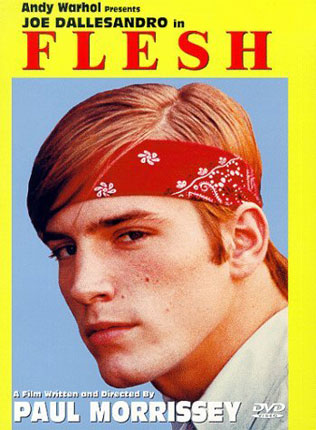
So I'm going to be teaching this course on Sex in American Cinema at St. Mary's for three weeks in May. There's already buzz and apparently all but a guarantee of high enrollment. Now I have to figure out what approach to take, and what to include.
All I know so far is I don't want to do this as a run-down of standard contemporary gender theory, but instead try to apply actual empirical, scientific, and social study of sex and sexual behavior to understanding films, their depiction of sexual relations and relationships, and their impact on ideas and behavior. I guess what I'm looking to break out of is the unconsciously puritannical strain that relentlessly seeks to substitute the social for the actually sexual in all studies of sexuality in art and culture. In the back of my head I suppose I'm also looking at it as a way to test my problem with Freudianism--the primary notion that cultural productions start with a sexual impulse, the basic concept of libido. (A lot of post-Freudians are more sophisticated than that, but still retain the basic assumption in the structure of their theory.)
This is the course description I gave them:
Cinema and sexual life have evolved together in the United States for a hundred years, and it’s impossible to say which has led and which has followed. From early instances of the screen star as sexual ideal in the 1920s, through the effect of drive-ins on sexual activity among teenagers in the 1950s, to the contemporary depiction of gay characters and love affairs, the movies have not only reflected Americans’ attitudes about sexuality but actively taught us what to believe, denounce, and accept. Gender roles and sexual relations are so central to narrative cinema that in a real sense the history of American cinema is the history of sex in America. To comprehend this subject, we will study both the social issues that have affected sexual behavior in America and the essential strategies in film studies that help us understand how films communicate ideas. Selected topics: Comedy and Courtship; Melodrama and the Power of Female Sexuality; Star Image and Sexual Scandal; Metaphors of Sex in Film Genres (Film Noir, Horror, Science Fiction); The Adult Video Industry; Race as Sexuality; Sex and Violence; Sexuality as Subversion.
I'll probably add a couple of topics to that. I'm interested to see if I can find a way to present hetero- and homosexuality as complementary instead of mutually exclusive; and to discuss non-sexual same-sex relations, because that area is so confused; and I want to get into the cultural creation of the teen-ager as a sexual category. Also, maybe, the not-so-subtle paradox underlying the defense-of-marriage debate. The clearest way I can put this, I think, is: What we often hear is that the opposition is about defining what marriage is for as a social contract: Marriage must be defended from dilution of its purpose of channeling reproduction (and thus sexual behavior) for society vs. marriage is essentially a monogamous affectional bond that can serve society. What this occludes is that marriage is being presented both as the acme of sex and where sex goes to die. That paradox, which may be a way the culture finds of expressing an important truth about both sex and society, is actually more interesting than the opposition the society creates in order to promote two equally unrealistic and counter-productive political positions. (At this point, promoting gay marriage has gotten as boring as fighting against it, though still not as criminally stupid.) That may also help get to the special position that the '50s seem to occupy in Americans' view of cultural representations of sex--which may just be a matter of the social power of the baby boomers. (That kind of thinking--the '50s as a state of mind rather than an historical period--is the kind of sloppy but pretentious thinking that might absolve me of the responsibility to offer any serious chronological study of cinema or of sexual behavior.) Anyway, it ought to a good place to explore the idea that cinematic representation by its nature has a dialectical relationship with the realities of the society, which is probably the idea that matters to me most, as a way of shifting the emphasis in the wrong-headed ways I think people use to look at art.
I am only just starting to think about what I might have them read. My initial search for stuff specifically on cinema and sex has been disappointing because the stuff has been dogmatic and not really about sex at all, quite often. I know I'd like to use The Trouble with Normal, because it sets out the issues about cultural attitudes so nicely, just as I know I want to start with the film Kinsey, because it helps define America's troubled relation with both sexual behavior and the representation of sexuality. (The very fact that a lot of people who talk about sex in cinema fail to start with this distinction indicates the problem I have finding stuff that will halp set the terms I want to use.)
But what do you care? You're wondering what movies I'm thinking of using. This is my A list:All That Heaven Allows
Basic Instinct
Bonnie and Clyde
Boys Don’t Cry (with The Brandon Teena story)
Broken Blossoms
Chinatown
Duel in the Sun
Inside Deep Throat (with Rated X – A Journey Through Porn)
Kinsey
The Lady Eve
Mandingo
Mildred Pierce
The Miracle of Morgan’s Creek
The Opposite of Sex
Pillow Talk
Play Misty for Me
Poison
Postcards from America
The Postman Always Rings Twice
Rosemary's Baby
Show Girls
Some Like It Hot
The Terminator (with Back to the Future – Oedipus)
Top Gun
Trash, Flesh, or Heat
Y tu mama tambien
Your Friends and Neighbors
I can only fit in 10-12, even if I squeeze in a couple of double features. My B list:
40-Year-Old Virgin
A Dirty Shame
A History of Violence
American Beauty
American Pie
Before Night Falls
Before Sunrise
Blue Velvet
Bob & Carol & Ted & Alice
Boogie Nights
Carnal Knowledge
Closer
Double Indemnity
Eternal Sunshine
Far from Heaven
Fast Times at Ridgemont High
Faster, Pussycat! Kill! . . . Kill!
Friday the 13th (or one of the series)
Gilda
Happiness
Happy Endings
His Girl Friday
It Happened One Night
L.I.E.
Lust in the Dust
Me and You and Everyone We Know
Midnight Cowboy
Mysterious Skin
Porky’s
Primary Colors
Psycho
Rear Window
Red River
Risky Business
Rope
Salo
Scream
Send Me No Flowers
Sex, Lies and Videotape
Shadow of a Doubt
She’s Gotta Have It
Stagecoach
The Basketball Diaries
The Butterfly Effect
The Doom Generation
The Dreamers
The Fluffer
The Idiots
The Road to Bali
The Thrill of It All
Thundercrack!
Velvet Goldmine
Vertigo
Wag the Dog
I just found a compilation of '50s-era sex-ed films on eBay which should be a great addition. The reason I'm thinking of a few foreign films is by way of contrast, to establish the conventions of American film, but also to go into how "exotic" came to mean "sexy"--just as "explicit" means "filthy" now.
By the way, my search for films for this course on imdb.com led me to I'm a Dirty Filthy Cocksucking Cunt! Why is it all the good titles are taken?
Now I'm going to get to work on what to read.
The rest of the time right now I'm focusing on course preparation, the talk I have to give on Whitman's "The Sleepers" at a conference in March, and the work I'm supposed to be doing for a book on dreams and education I'm working on with Kelly Bulkeley and Phil King from the International Association for the Study of Dreams. Gary Kornblau has something in store for me but I don't have time to get started on it yet.
Friday, January 20, 2006

I've been in Canada; I've been putting my spring classes together; I've been sick. When I get it together, I'm going to start writing a bit here about my plans for a Sex in American Cinema course at St. Mary's College in May. Meanwhile, I don't have to say anything at all about Brokeback Mountain, because Mark Simpson, who is as practically perfect as his compatriot Mary Poppins, has said it all already. Mark Simpson invented the term "metrosexual" and here he outdoes it with "retrosexual" (yum) and "fauxmosexual" (and you know who you are). At first it may appear that he's just complaining that we don't see Jake and Heath doing it--and he has every right to complain, God knows--but instead, he is, as he often does, pointing out the obvious that everyone ignores: Brokeback Mountain is about acceptable styles of masculinity, and avoids its ostensible subject of sex almost completely.
I love Mark.
By the way, the image of Brokeback recast comes from a Chinese website, and I have no idea what the context is. But I find I get kind of a charge out of it.
LONESOME METRO-COWBOYS
By Mark Simpson
Is there a support group for people who didn't like BROKEBACK MOUNTAIN? We must, if the rave reviews and newspaper reports are to be believed, be a very tiny - not to mention vulnerable - minority. Am I dead inside because I didn't experience the torrent of emotions I've been reading about in newspapers and in movie forums? Am I as emotionally crippled as Ennis because I didn't blub and hug after sitting through this `visceral' movie, but instead wanted to go and `help with the round up'? Am I suffering from internalized homophobia?
Probably all of the above. But this doesn't mean that this film which has become a phenomenon, isn't as tedious, mawkish, lifeless, unconvincing and bizarrely hypocritical as I found it to be. I wish now that I'd left after the first 15 minutes with the two bored, gum-chewing teen girls in front of me at the multiplex and gone shopping with them for the latest Westlife album instead. There would at least have been more sex.
OK, so there's a hurried joyless near-rape in the dark at the beginning, but we've seen all that before in more detail in prison movie films like SHAWSHANK REDEMPTION. Although true to Annie Proulx's original short story, this, the only sex scene in this `love movie' seems to owe more to director Ang Lee's awkwardness and impatience about MANSEX than Ennis'. This filmic essay on homophobia and its terrible toll goes out of its way to shield us from what it is that these two men have together or what it is that they do when together - or why they would bother to go to the trouble of trying to relive it every year for decades. Across thousands of miles.
Even when they kiss, it's carefully shot so that we never really see them kiss, the shadows in the tepee artfully falls across their mouths, or if somewhere better lit they appear just to be pushing their faces together, lips and teeth gritted. This makes the scene in which Ennis' wife spies these desperately `closeted' guys `kissing' outside her home all the more unconvincing and ironic. The realisation suddenly hits her: `Omigod! My husband is a fauxmosexual!' No wonder she's distressed.
Their boss also clocks the lover boys from a distance. But why their boss would assume they were queer because they liked to wrestle with their tops off rather than wannabe Abercrombie and Fitch models I don't know; maybe he had special binoculars. But I have to say that I sat right at the front of the theatre and I'm still not really sure what the hell they get up to on Brokeback Mountain. They don't talk much. They don't shag. They don't kiss properly. As Ennis' wife complains, `You go fishing but you don't bring back any fish.' The film tells us they're lovers. Insists that they're lovers, goddammit. But fails utterly to show it.
Perhaps I'm merely a jaded homosexual. Perhaps I've seen too much. Perhaps it's absurd of me to expect a proper snog between the lovers in a `love film', especially in a film that is telling us over and over again in painfully didactic fashion how bad homophobia is and a film which has been trumpeted for it's `courage'. But in the small provincial town in England's equivalent of Wyoming where I now live, I've several times seen (or rather stared at) drunken young soldiers snogging one another, `for a laugh', tongues and everything, in the middle of crowded pubs, much more convincingly, passionately and lingeringly than these actors who have been told by a thousand interviewers how `brave' and `committed' they were to do these scenes.
But then, there's not much realistic about this film. Even the impassively beautiful Wyoming countryside seems to have been wrapped in cellophane and Brokeback Mountain a big ribbon bow stuck on top of it. The boys are also very appetising, but while Heath Ledger turns in a fine performance with an almost impossible script and bloodless directing, both of them are too pretty - Jake Gyllenhaal in particular, lovely as he is, looks too metropolitan, too confected, too DETAILS fashion-shoot with a Western theme. By the time he reaches the 70s he looks he like the cowboy out of the Village People: the same haircut, the same black moustache, the same Stetson. But maybe this shouldn't be so surprising since the cowboy from the Village People, I discovered later, was the `gay cowboy consultant' on this metro-cowboy movie; very Queer Eye For The Western Guy. (Personally, I wished they'd hired Nancy Walker, director of CAN'T STOP THE MUSIC in place of Ang Lee).
BROKEBACK is not a serious exploration of rural retrosexuality and its discontents, and certainly not a love story, but rather it's feature-length propaganda for contemporary, metropolitan metrosexuality. It is an attack on retrosexual repression in general and old-style, `outmoded' stoic masculinity in particular. This is the real reason for its tremendous, zeitgeisty popularity.
Both cowboys, Ennis in particular, are prisoners of their problems with expressing feelings: homophobia, internal and external, is just the biggest symbol of this. Their fat bald boss is an unfeeling bigot. Ennis' father took him to see the castrated corpse of a local queer when he was a small boy (`for all I know he mighta done it himself'). Jack's abusive father is uptight, cold and resentful. His father-in-law is a bullying buffon (who turns out to be a coward for good measure).
None of the older males in this film are fully human - because they aren't in touch with their feelings. They are all twisted, mean and nasty. Jack and Ennis, a product of that world, are stunted too; they're just not so mean and nasty. This is why they are also the only attractive males in Wyoming. Their desirability is proof to a modern, metrosexual audience of their sympathy, of their goodness, of their modernity, of the awfulness of their retrosexual predicament.
Because retrosexuality rather than homophobia per se is the real target of this film's didacticism, the emotional hobbling is hetero as well as homo. Ennis is portrayed as someone who is not just closeted about his passion for Jack but closeted in all his relationships. Whenever confronted with the need for a commitment or a demonstration of love, either for Jack, his wife, his daughter, his new girlfriend after his wife divorces him, he starts mumbling `ahh don't know. roundup is comin.'. Fear and loathing of homosexuality, of male emotionality and sensuality, of explicit tenderness between men is presented as a continuum.
Which, to some degree, it is. As the `father' of the metrosexual, I have some sympathy with some of the ideology behind this film, if not the execution. And at least in BROKEBACK male sensuality, aestheticism and homoerotics is not displaced into flip-flops and facials and appropriation of stereotypically effeminate homosexual traits as it was in the spayed marketing version of metrosexuality - even if it is somewhat fetishized here into jeans and carefully beat-up pick-up trucks.
But dress it up purdy or plain, or call it by any other name, like the marketing version of metrosexuality that preceded it, BROKEBACK is nevertheless also an accessorisation of homosexuality. This is effectively a film about two straight men who have a homosexual love-affair. After all, the two protagonists are married, the actors who play them are straight, as is the director, the author of the short story it's based on, and the vast majority of the audience. Even the sex is `straight' - there's rather more hetero sex than homo. BROKEBACK is literally acting out the culture's current fascination with homoerotics and male sensuality. Which, in itself, is no bad thing. Homoerotics and male sensuality are not the unique property of homosexuals. In fact, they make up a small fraction of those human beings who are affected by these things.
And yes, the reticence of the film in regard to actually showing Jack and Ennis' love for one another, either sexually or in any other way, and its generally unconvincing air, may not be entirely down to Hollywood's nervousness or hypocrisy. If their love for one another is merely symbolic, to actually show it instead of just asserting it might diminish its metrosexual message.
But what makes a film a cultural phenomenon doesn't necessarily make it any good. For me BROKEBACK's metro-cowboy propaganda is right smack dab in the place where it's supposed to have a big bleeding heart and is the very thing which makes it so disappointing. The ultimate irony is that BROKEBACK the `breakthrough' movie depicts less credible warmth, intimacy and tenderness between the male lovers than a movie like say, BUTCH CASSIDY AND THE SUNDANCE KID. Now nearly forty years old.
Palpably BROKEBACK is not the movie that people seem to want it to be - but it is a movie which, in it's vagueness, ellipsis and coyness, and even its hypocrisy, allows itself to be misrecognised as the modern explicitly male romance movie people clearly need it to be. Let's hope that its success means that someone out there can now make a movie that is a little more convincing.
Or even just one in which men in love kiss with their mouths open.
Copyright Mark Simpson 2006Mark Simpson's SAINT MORRISSEY has just been published in hardback by Simon & Schuster.
Subscribe to:
Posts (Atom)


 Posts
Posts

