Maybe I'll just go into the business of posting links to stuff I read online, which I thought I'd avoid. But this is an extremely interesting article:
http://www.tcsdaily.com/article.aspx?id=092006B
Tuesday, October 03, 2006


Friday, September 15, 2006
This message went out to my film course today
At the AFI Silver Theatre in Silver Spring (2 blocks from Metro):
Women on the Verge of a Nervous Breakdown (Pedro Almodovar) - a film from Spain, but extremely influential in recent American independent cinema, and worth seeing for the cotrast between European and American cinema. Other Almodovar films coming to AFI soon in a retrospective: All About My Mother, Talk to Her, Live Flesh, Bad Education, and Law of Desire, which remains unavailable on DVD in the US and is one of the most important of all gay films. See at least Almodovar film if you can; they're unlike anything else.
At Landmark E St:
This Film Is Not Yet Rated - Kirby Dick's documentary on the MPAA rating system, very directly relevant to this course.
At Shirlington: Quinceanera (Richard Glatzer and Wash Westmoreland) - "Wash West," as he used to be known, started out as a gay porn director, and is probably the only example of a director successfully transitioning from porn to mainstream film (by way of "The Fluffer," a fairly good independent film set in the porn industry). Quinceanera, a film about Latino/Anglo/straight/gay tensions in an LA neighborhood, got raves at Sundance. It's also playing at the the Dupont, but nobody should ever have to try to watch a film there.
Hollywoodland and The Black Dahlia, both playing at area theaters to lukewarm reviews, are good examples of contemporary directors imitating the style of film noir to tell a story of the dark side of the American dream in southern California. A consistent theme that's of some interest in the depiction of sexuality in American cinema is the way Hollywood keeps returning to depictions of the corruption of Hollywood. In other words, the Republican election strategy of emphasizing that Hollywood is estranged from the American mainstream may itself be an ideological theme manufactured in Hollywood.
Women on the Verge of a Nervous Breakdown (Pedro Almodovar) - a film from Spain, but extremely influential in recent American independent cinema, and worth seeing for the cotrast between European and American cinema. Other Almodovar films coming to AFI soon in a retrospective: All About My Mother, Talk to Her, Live Flesh, Bad Education, and Law of Desire, which remains unavailable on DVD in the US and is one of the most important of all gay films. See at least Almodovar film if you can; they're unlike anything else.
At Landmark E St:
This Film Is Not Yet Rated - Kirby Dick's documentary on the MPAA rating system, very directly relevant to this course.
At Shirlington: Quinceanera (Richard Glatzer and Wash Westmoreland) - "Wash West," as he used to be known, started out as a gay porn director, and is probably the only example of a director successfully transitioning from porn to mainstream film (by way of "The Fluffer," a fairly good independent film set in the porn industry). Quinceanera, a film about Latino/Anglo/straight/gay tensions in an LA neighborhood, got raves at Sundance. It's also playing at the the Dupont, but nobody should ever have to try to watch a film there.
Hollywoodland and The Black Dahlia, both playing at area theaters to lukewarm reviews, are good examples of contemporary directors imitating the style of film noir to tell a story of the dark side of the American dream in southern California. A consistent theme that's of some interest in the depiction of sexuality in American cinema is the way Hollywood keeps returning to depictions of the corruption of Hollywood. In other words, the Republican election strategy of emphasizing that Hollywood is estranged from the American mainstream may itself be an ideological theme manufactured in Hollywood.
Friday, September 08, 2006
Sunday, September 03, 2006
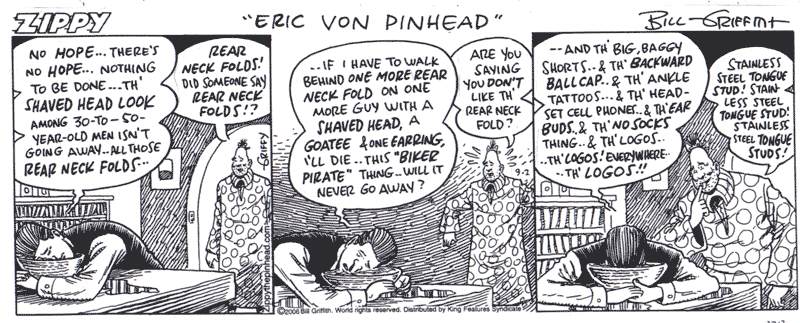
On Submitting to Trends in Popular Culture and Liking It

"I have HAD IT with these motherfuckin' SNAKES on this MOTHERFUCKIN' PLANE!"
Thursday, August 31, 2006
Annals of Literature
The New York Times today reports that A. N. Wilson, in his biography of the poet John Betjeman, published what he called a love letter by Betjeman which has been revealed to be a hoax. Wilson accepted the authority of the letter, which was sent to him under obviously suspicious circumstances, without apparently checking up on it. It turns out that the first letters of each sentence read, "A N WILSON IS A SHIT."
Saturday, August 26, 2006
Interestingly enough
Tim Page, in tomorrow's Washington Post, chooses Alvin Lucier's "I Am Sitting in a Room" as one of his 25 representative pieces of 20th-century music. I've always found more in it than just about any other piece of classical musical experimentalism, and it's been the topic of conversations with Colby about noise and degeneration in processes of representation.
http://www.amazon.com/gp/product/B00000INI7/sr=1-3/qid=1156602723/ref=sr_1_3/104-3748241-2597536?ie=UTF8&s=music
http://www.amazon.com/gp/product/B00000INI7/sr=1-3/qid=1156602723/ref=sr_1_3/104-3748241-2597536?ie=UTF8&s=music
Monday, August 14, 2006
Creator of "Frank & Ernest" comic strip dead at 81
Associated Press
MANHATTAN BEACH, Calif. - Bob Thaves, whose nationally syndicated comic strip "Frank & Ernest" amused newspaper readers for decades with its quirky observations on life, has died of respiratory failure. He was 81.
Thaves died Tuesday at Little Company of Mary Hospital in Torrance, said his daughter, Sara Thaves.
His long-running strip stars the happy-go-lucky punsters Frank and Ernest, who travel the universe and through time - and sometimes change shape - as they comment on everything from science to world politics.
The strip, which was syndicated in 1972, is distributed to 1,300 newspapers worldwide by Newspaper Enterprise Association and is read by more than 25 million people a day.
Thaves' son, Tom, has collaborated with his father on "Frank & Ernest" since 1997 and will continue to produce it, according to a statement from United Media, whose Newspaper Enterprise Association syndicates the strip.
Sara Thaves said her father's curiosity about the world made his comic strip unique.
"He was an avid reader. There are books and periodicals and newspapers stacked up all over the house," she said in a telephone interview Wednesday. "That allowed him to be interested and engaged with the world in a way that was pretty unique and it consequently made him a really interesting person to be around."
Thaves, who held both bachelor's and master's degrees in psychology from the University of Minnesota, began cartooning as a child and was published in a college humor magazine at the University of Minnesota.
He went on to cartoon for various magazines and created "Frank & Ernest" while working as an industrial psychology consultant in Los Angeles. The strip wasn't syndicated until Thaves was 48, and he didn't quit his consulting job for several years.
"He knew the chances of being syndicated - you might as well try to be a professional athlete," his daughter said. "And then to be as successful as he was, it's even more lucky. ... He did not take that for granted."
"Frank & Ernest" went on to become one of the most popular comic strips in the world, as well as one of the most innovative. According to United Media, it was the first newspaper cartoon to run in a strip format; the first to use block lettering; the first to use comic book-style digital coloring for the Sunday pages; and one of the first to have its own Web site, in 1997.
The Web site features interactive cartoons as a way to draw Internet readers without losing newspaper fans, Sara Thaves said.
Thaves was a three-time winner of the National Cartoonists Society's prestigious Reuben Award for best syndicated panel and won the Free Press Association's Mencken Award for best cartoon. He was named one of the University of Minnesota's 50 most distinguished alumni and was recognized this year as Champion of Creativity by the American Creativity Association.
In addition to his daughter and son, Thaves is survived by his wife of 52 years, Katie, and a son-in-law, Michael van Eckhardt.
Associated Press
MANHATTAN BEACH, Calif. - Bob Thaves, whose nationally syndicated comic strip "Frank & Ernest" amused newspaper readers for decades with its quirky observations on life, has died of respiratory failure. He was 81.
Thaves died Tuesday at Little Company of Mary Hospital in Torrance, said his daughter, Sara Thaves.
His long-running strip stars the happy-go-lucky punsters Frank and Ernest, who travel the universe and through time - and sometimes change shape - as they comment on everything from science to world politics.
The strip, which was syndicated in 1972, is distributed to 1,300 newspapers worldwide by Newspaper Enterprise Association and is read by more than 25 million people a day.
Thaves' son, Tom, has collaborated with his father on "Frank & Ernest" since 1997 and will continue to produce it, according to a statement from United Media, whose Newspaper Enterprise Association syndicates the strip.
Sara Thaves said her father's curiosity about the world made his comic strip unique.
"He was an avid reader. There are books and periodicals and newspapers stacked up all over the house," she said in a telephone interview Wednesday. "That allowed him to be interested and engaged with the world in a way that was pretty unique and it consequently made him a really interesting person to be around."
Thaves, who held both bachelor's and master's degrees in psychology from the University of Minnesota, began cartooning as a child and was published in a college humor magazine at the University of Minnesota.
He went on to cartoon for various magazines and created "Frank & Ernest" while working as an industrial psychology consultant in Los Angeles. The strip wasn't syndicated until Thaves was 48, and he didn't quit his consulting job for several years.
"He knew the chances of being syndicated - you might as well try to be a professional athlete," his daughter said. "And then to be as successful as he was, it's even more lucky. ... He did not take that for granted."
"Frank & Ernest" went on to become one of the most popular comic strips in the world, as well as one of the most innovative. According to United Media, it was the first newspaper cartoon to run in a strip format; the first to use block lettering; the first to use comic book-style digital coloring for the Sunday pages; and one of the first to have its own Web site, in 1997.
The Web site features interactive cartoons as a way to draw Internet readers without losing newspaper fans, Sara Thaves said.
Thaves was a three-time winner of the National Cartoonists Society's prestigious Reuben Award for best syndicated panel and won the Free Press Association's Mencken Award for best cartoon. He was named one of the University of Minnesota's 50 most distinguished alumni and was recognized this year as Champion of Creativity by the American Creativity Association.
In addition to his daughter and son, Thaves is survived by his wife of 52 years, Katie, and a son-in-law, Michael van Eckhardt.
Thursday, August 10, 2006
The Invisible Machine
I'm studying up on Utopias to teach a couple of courses aligned with the Modernism exhbitiion planned for the Corcoran in Spring 2007. Every time I take on a topic, it seems to me the one thing that explains everything in the world that we're not getting (even though it's always some point that's painfully obvious--my whole life theme seems to be that what's most important is what we're overlooking). But this passage from Lewis Mumford's essay, "Utopia, the City and the Machine" is particularly clarifying:
The many genuine improvements that science and technics have introduced into every aspect of existence have been so notable that it is perhaps natural that its grateful bneficiaries should have overlooked the ominous social context in which these changes have taken place, as well as the heavy price we have already paid for them, and the still more forbidding price that is in prospect. Until the last generation it was possible to think of the various components of techonology as additive. This meant that each new mechanical invention, each new scientific discovery, each new application to engineering, agriculture, or medicine, could be judged separately on its own performance, estimated eventually in terms of the human good accomplished, and diminished or eliminated if it did not in fact promote human welfare.
This belief has now proved an illusion. Though each new invention or discovery may respond to some genuine human need, or even awaken a fresh human potentiality, it immediately becomes part of an articulated totalitarian system that, on its own premises, has turned the machine into a god whose power must be increased, whose prosperity is essential to all existence, and whose operations, however irrational or compulsive, cannot be challenged, still less modified.
The only group that has understood the dehumanizing effects of the Invisible Machine are the avant-garde artists, who have caricatured it by going to the opposite extreme of disorganization. Their calculated destructions and "happenings" symbolize total decontrol: the rejection of order, continuity, design, significance, and a total inversion of human values which turns criminals into saints and scrambled minds into sages. In such anti-art, the dissolution of our entire civilization into randomness and entropy is prophetically symboliozed. In their humorless deaf-and-dumb language, the avant-garde arrtists reach the same goal as scientists and technicians, but by a different route--both seek or at least welcome the displacement of and the eventual elimination of man. In short, both the further affirmation of the mechanical utopia and its total rejection would beget dystopia. Wherever human salvation may lie, neither utopia nor dystopia, as now conceived, promises it.
The many genuine improvements that science and technics have introduced into every aspect of existence have been so notable that it is perhaps natural that its grateful bneficiaries should have overlooked the ominous social context in which these changes have taken place, as well as the heavy price we have already paid for them, and the still more forbidding price that is in prospect. Until the last generation it was possible to think of the various components of techonology as additive. This meant that each new mechanical invention, each new scientific discovery, each new application to engineering, agriculture, or medicine, could be judged separately on its own performance, estimated eventually in terms of the human good accomplished, and diminished or eliminated if it did not in fact promote human welfare.
This belief has now proved an illusion. Though each new invention or discovery may respond to some genuine human need, or even awaken a fresh human potentiality, it immediately becomes part of an articulated totalitarian system that, on its own premises, has turned the machine into a god whose power must be increased, whose prosperity is essential to all existence, and whose operations, however irrational or compulsive, cannot be challenged, still less modified.
The only group that has understood the dehumanizing effects of the Invisible Machine are the avant-garde artists, who have caricatured it by going to the opposite extreme of disorganization. Their calculated destructions and "happenings" symbolize total decontrol: the rejection of order, continuity, design, significance, and a total inversion of human values which turns criminals into saints and scrambled minds into sages. In such anti-art, the dissolution of our entire civilization into randomness and entropy is prophetically symboliozed. In their humorless deaf-and-dumb language, the avant-garde arrtists reach the same goal as scientists and technicians, but by a different route--both seek or at least welcome the displacement of and the eventual elimination of man. In short, both the further affirmation of the mechanical utopia and its total rejection would beget dystopia. Wherever human salvation may lie, neither utopia nor dystopia, as now conceived, promises it.
Monday, August 07, 2006
Keepsakes
I'm traveling and can't post frrom my home computer so this will be primitive, but look at Dennis Cooper's blog for today and you'll see a pretty extensive exhibition of keepsakes from regulars: photos with reminscences. Mine are about the most long-winded, natch, yet poignant, fraught with suspense, revelatory. Dennis' blog is a pretty great endeavor--one of the few I know that reaches in all directions to bring in people obsessed with very different obsessions, connecting them along unexpected lines of affinity, which is very much in character for him. Dennis is a great anthologizer and it makes sense that he's showing the possibilities of the blog as a contemporary literary form.
http://denniscooper.blogspot.com/
http://denniscooper.blogspot.com/
Thursday, July 20, 2006
The Destruction of the Sodomites

"'The day of the birth of Our Lord Jesus Christ was prefigured according to Saint Augustine and Saint Jerome by the fire of of Sodom, since all the sodomites in the world were annihilated on that night. The same Saint Jerome comments on Isaiah (VIII-X): "The light was so potent that it destroyed all those who engaged in that vice. It was the work of Christ. It carried out the extirpation of this filth from the face of the earth."' There is a mystery here. Modern research has found no source for the legend in the works of Jerome or Augustine, despite the specificity of the references, and has failed to trace it back beyond the early thirteenth century. But this fantastic and ugly fable, which turned the prince of peace and good will into a mass murderer, gained a powerful hold on the Iberian imagination. It was repeated in a theological thesis by a Cuban archbishop as late as 1860."
-Homosexuality and Civilization, by Louis Crompton, quoting from a 15th-century guide for inquisitors in Spain.
Fables and myth have the interesting advantage of embodying contradictions in symbolic form which, if they were stated rationally, in a form susceptible to logic, would be exposed as specious instead of appreciated as powerful images expressing ambivalences and conflicts. In the rhetoric of religion and politics, homosexuality is on the one hand completely unnatural and on the other so seductive that even the most confirmed heterosexuals have to be protected from it. The association of homosexuality with apocalyptic destruction is especially fascinating. Nobody knows exactly what fate it is that has to defended against by outlawing gay marriage, adoption by gay couples, a visible gay presence in the military--it seems incredibly bizarre that this hysterical movement has just given up entirely on preventing sodomy itself, which is all that really matters, just as they gave up earlier on preventing masturbation and birth control. The arguments are so confused I've never felt I could accept any analysis of them I've ever come across; I feel convinced that public defenses against homosexuality have to be rooted pretty deep in the unconscious, but theorists of "homophobia" usually seem to me to be conjuring up their own nightmare visions of the enemy--that is, homophobia and homophobiaphobia seem to come to the same thing (as do pedophilia and pedophiliaphobia). The most obvious relation between the dreaded sin of homosexuality (as in previous eras of witchcraft and various heresies) and the End of the World is simply that apocalyptic destruction stands in, in the unconscious mind, for "I don't know what": "If men get to fuck other men, then I don't know what." The thing is, that "I don't know what" has to be taken very literally: Why does one sin or another place the believer in the position, not just of expressing hatred or contempt, but of so entirely giving up any attempt at reasoning that they have to fall into the default position of "I don't know what," therefore: the future is blank or ceases to exist.
But this idea of the spontaneous destruction of all sodomites in a single night prefiguring the birth of Christ is something you can sink your teeth into. It of course invites a lot of the same kind of questions as any theological myth: If sin is that easy to eradicate, why not do it more often? If sodomites were eradicated in one night, why did they come back? And if they could, why bother eradicating them in the first place? But even more, I appreciate the idea of some kind of balance between the destruction of the sodomites and the birth of Christ; it makes one think about what Christ and the sodomites might have in common in the minds of believers. (Crompton also notes that in Italy as well as Spain, an interesting feature of the public martyrdom of sodomites is how much widespread sympathy it elicited, to the point where officials felt they had to intervene to soften the harshness of punishments.) It therefore suggests to me that the most dangerous aspect of a totalizing and comprehensive opposition to any sort of unreasoning prejudice, even at its most homicidal, is the failure to recognize the ambivalence at its root, and therefore the potential for altering apparently implacable conflicts. Why, after all, has religiously based anti-semitism all but disappeared in the Christian sects of the United States while it's become an even more dominant theme in Islam? It does no good to say it's "about" the Arab-Israeli conflict, in part because that just places the question at one remove instead of answering it. (I'm not denying the material sources of all important political conflicts; I'm just saying they don't explain away the accompanying ideologies and mass psychology of ideology.) It would be a mistake to put aside the question of how the most rabid anti-gay rhetoric satisfies homosexual impulses--especially in religious contexts.
Fables and myth have the interesting advantage of embodying contradictions in symbolic form which, if they were stated rationally, in a form susceptible to logic, would be exposed as specious instead of appreciated as powerful images expressing ambivalences and conflicts. In the rhetoric of religion and politics, homosexuality is on the one hand completely unnatural and on the other so seductive that even the most confirmed heterosexuals have to be protected from it. The association of homosexuality with apocalyptic destruction is especially fascinating. Nobody knows exactly what fate it is that has to defended against by outlawing gay marriage, adoption by gay couples, a visible gay presence in the military--it seems incredibly bizarre that this hysterical movement has just given up entirely on preventing sodomy itself, which is all that really matters, just as they gave up earlier on preventing masturbation and birth control. The arguments are so confused I've never felt I could accept any analysis of them I've ever come across; I feel convinced that public defenses against homosexuality have to be rooted pretty deep in the unconscious, but theorists of "homophobia" usually seem to me to be conjuring up their own nightmare visions of the enemy--that is, homophobia and homophobiaphobia seem to come to the same thing (as do pedophilia and pedophiliaphobia). The most obvious relation between the dreaded sin of homosexuality (as in previous eras of witchcraft and various heresies) and the End of the World is simply that apocalyptic destruction stands in, in the unconscious mind, for "I don't know what": "If men get to fuck other men, then I don't know what." The thing is, that "I don't know what" has to be taken very literally: Why does one sin or another place the believer in the position, not just of expressing hatred or contempt, but of so entirely giving up any attempt at reasoning that they have to fall into the default position of "I don't know what," therefore: the future is blank or ceases to exist.
But this idea of the spontaneous destruction of all sodomites in a single night prefiguring the birth of Christ is something you can sink your teeth into. It of course invites a lot of the same kind of questions as any theological myth: If sin is that easy to eradicate, why not do it more often? If sodomites were eradicated in one night, why did they come back? And if they could, why bother eradicating them in the first place? But even more, I appreciate the idea of some kind of balance between the destruction of the sodomites and the birth of Christ; it makes one think about what Christ and the sodomites might have in common in the minds of believers. (Crompton also notes that in Italy as well as Spain, an interesting feature of the public martyrdom of sodomites is how much widespread sympathy it elicited, to the point where officials felt they had to intervene to soften the harshness of punishments.) It therefore suggests to me that the most dangerous aspect of a totalizing and comprehensive opposition to any sort of unreasoning prejudice, even at its most homicidal, is the failure to recognize the ambivalence at its root, and therefore the potential for altering apparently implacable conflicts. Why, after all, has religiously based anti-semitism all but disappeared in the Christian sects of the United States while it's become an even more dominant theme in Islam? It does no good to say it's "about" the Arab-Israeli conflict, in part because that just places the question at one remove instead of answering it. (I'm not denying the material sources of all important political conflicts; I'm just saying they don't explain away the accompanying ideologies and mass psychology of ideology.) It would be a mistake to put aside the question of how the most rabid anti-gay rhetoric satisfies homosexual impulses--especially in religious contexts.
Wednesday, July 19, 2006

News Flash
President Bush today vetoed the Senate's stem-cell research bill, flanked by hundreds of soiled Kleenex tissues, stiffened hand towels, and discarded tampons. "Each cries out eloquently to Americans never to forget the innocents who are wholly in their power. Let the enemies of the culture of life be warned."
Friday, July 14, 2006
Synchronicity

This morning when I sat down to look at the paper, I was holding in my hand a small red button with "UTOPIA" on it in white letters--from the V&A show on Modernism that's coming to the Corcoran. And the first thing I saw on the front page was a small headline reading: Red Buttons is Dead.
Tuesday, July 11, 2006
Saturday, July 08, 2006
Here's the story on Chris Moukarbel's film, based on an excerpt from the Oliver Stone 9/11 script, which has resulted in his being sued. It was his thesis project at Yale this year.

An Artist Releases a New Film After Paramount Blocks His First
By FELICIA R. LEE
Published: July 8, 2006
He's back. Chris Moukarbel, a New York artist who was sued by Paramount Pictures over a 12-minute video based on a bootleg Oliver Stone film script about 9/11, has another video in a New York gallery exhibition that seeks to marry politics and art. This one was created from film shot in the process of making the video that led to the lawsuit.
Paramount filed suit in United States District Court in Washington last month saying that Mr. Moukarbel's original video, "World Trade Center 2006," infringed on the copyright of the screenplay for Mr. Stone's $60 million film "World Trade Center," scheduled for release in August.
"I'm interested in memorial and the way Hollywood represents historical events," Mr. Moukarbel said in an interview yesterday, the day after his new video was shown as part of the group exhibition "Data Mining" at Wallspace, a Manhattan gallery. "Through their access and budget they're able to affect a lot of people's ideas about an event and also affect policy. I was deliberately using their script and pre-empting their release to make a statement about power."
"My film was offered free on the Internet," he said of "World Trade Center 2006." "It cost $1,000 to produce. We're at a place now where technology allows the democratization of storytelling."
After a temporary restraining order was placed on the distribution and showing of his video (part of a thesis project for his Master of Fine Arts at Yale), Mr. Moukarbel went ahead and produced another for Wallspace. For his new 13-minute video, he used film of the two actors in the first video while they were waiting for direction and getting into character. It has no dialogue except for the banter between the actors and off-camera direction from Mr. Moukarbel.
Mr. Moukarbel, 28, who graduated from Yale in May, said his new video was intended to capture the art of performance and to serve as commentary on his plight. "I had to put together a project to reflect on the old project but also stand in its own right," he said.
Chris Klatell, a lawyer for Mr. Moukarbel, said yesterday: "We've reached a settlement in principle with Paramount that we hope to finalize. Chris is in full compliance with the temporary restraining order. The new video doesn't have any dialogue or any elements of the 'World Trade Center' screenplay."
Spokesmen for Paramount could not be reached for comment yesterday.
Wallspace has addressed the controversy by mounting on a wall the text of a press statement by Mr. Moukarbel explaining his ideas about his work, the genesis of his project and his legal adventure.
Janine Foeller, the co-owner and co-director of Wallspace, said the curator Joe Scanlan had intended to put Mr. Moukarbel's first 9/11 video in the show. "We're happy and willing to show Chris's work," Ms. Foeller said. "It's taken on another life of sorts."
Mr. Moukarbel admits that, for the first video, he used a bootleg script. Mr. Stone's film focuses on the ordeal of two Port Authority of New York and New Jersey police officers, Will Jimeno and John McLoughlin, who survived the World Trade Center collapse.
In March, Mr. Moukarbel created a Web site, pointsofdeparture.net, for the video. Other sites, including filmthreat.com, began to take notice. The question in cyberspace was whether his first video was valid commentary or a rip-off of Mr. Stone and the movie studio. Many e-mail postings sided with Mr. Moukarbel.
"I would have been bummed if they hadn't noticed," Mr. Moukarbel said of the executives at Paramount. "But I didn't expect to be sued."

An Artist Releases a New Film After Paramount Blocks His First
By FELICIA R. LEE
Published: July 8, 2006
He's back. Chris Moukarbel, a New York artist who was sued by Paramount Pictures over a 12-minute video based on a bootleg Oliver Stone film script about 9/11, has another video in a New York gallery exhibition that seeks to marry politics and art. This one was created from film shot in the process of making the video that led to the lawsuit.
Paramount filed suit in United States District Court in Washington last month saying that Mr. Moukarbel's original video, "World Trade Center 2006," infringed on the copyright of the screenplay for Mr. Stone's $60 million film "World Trade Center," scheduled for release in August.
"I'm interested in memorial and the way Hollywood represents historical events," Mr. Moukarbel said in an interview yesterday, the day after his new video was shown as part of the group exhibition "Data Mining" at Wallspace, a Manhattan gallery. "Through their access and budget they're able to affect a lot of people's ideas about an event and also affect policy. I was deliberately using their script and pre-empting their release to make a statement about power."
"My film was offered free on the Internet," he said of "World Trade Center 2006." "It cost $1,000 to produce. We're at a place now where technology allows the democratization of storytelling."
After a temporary restraining order was placed on the distribution and showing of his video (part of a thesis project for his Master of Fine Arts at Yale), Mr. Moukarbel went ahead and produced another for Wallspace. For his new 13-minute video, he used film of the two actors in the first video while they were waiting for direction and getting into character. It has no dialogue except for the banter between the actors and off-camera direction from Mr. Moukarbel.
Mr. Moukarbel, 28, who graduated from Yale in May, said his new video was intended to capture the art of performance and to serve as commentary on his plight. "I had to put together a project to reflect on the old project but also stand in its own right," he said.
Chris Klatell, a lawyer for Mr. Moukarbel, said yesterday: "We've reached a settlement in principle with Paramount that we hope to finalize. Chris is in full compliance with the temporary restraining order. The new video doesn't have any dialogue or any elements of the 'World Trade Center' screenplay."
Spokesmen for Paramount could not be reached for comment yesterday.
Wallspace has addressed the controversy by mounting on a wall the text of a press statement by Mr. Moukarbel explaining his ideas about his work, the genesis of his project and his legal adventure.
Janine Foeller, the co-owner and co-director of Wallspace, said the curator Joe Scanlan had intended to put Mr. Moukarbel's first 9/11 video in the show. "We're happy and willing to show Chris's work," Ms. Foeller said. "It's taken on another life of sorts."
Mr. Moukarbel admits that, for the first video, he used a bootleg script. Mr. Stone's film focuses on the ordeal of two Port Authority of New York and New Jersey police officers, Will Jimeno and John McLoughlin, who survived the World Trade Center collapse.
In March, Mr. Moukarbel created a Web site, pointsofdeparture.net, for the video. Other sites, including filmthreat.com, began to take notice. The question in cyberspace was whether his first video was valid commentary or a rip-off of Mr. Stone and the movie studio. Many e-mail postings sided with Mr. Moukarbel.
"I would have been bummed if they hadn't noticed," Mr. Moukarbel said of the executives at Paramount. "But I didn't expect to be sued."
Monday, June 12, 2006
The reason A Prairie Home Companion works so well for its subject, the reason it's an unusual movie, the reason it's a typical Altman movie, and the reason critics have been more or less condescendingly calling it endearing rather than just recognizing that it's a really good movie, all come down to the stranglehold the standard three-act structure has on American movies. While most movies derive from Ibsen, Altman's derive from Chekhov; not only are their plots and characters diffuse, but they have that same seriocomic spirit and unfamiliar acceptance of everything that make Chekhov popular with actors and a little scary for most audiences. No matter how big the project, Altman's movies are always modest in aim; he's never wanted to make a great movie featuring great performances that will knock everyone's socks off, and that makes him very hard for film reviewers to really get. They treat him like an eccentric uncle because they don't get that the rejection of greatness is a pretty great thing.
John C. Reilly has such a beautiful voice you have to wish somebody'd write him a musical.
The Faculty Room, at Wolly Mammoth, is not great and does not work. There's sort of an amusing bit in it in which a sock-puppet Holden Caulfield has a dialogue with an English teacher and, eventually, a sock-puppet J. D. Salinger. The thing is, it only reminds one that Holden is right: most people are phonies, and that sucks, and people really ought to try to make some kind of commitment to being truer to who they really are. The Faculty Room seems phony because everything in it seems contrived to have its effect, including the invocation of the popularity of the Left Behind books. It's evident that the play is trying to use the Rapture in the way Angels in America used angels, but it comes off as just a device to make something happen. The central line of the drama futzes around on the topic of teachers sleeping with students, but it just makes the appeal to conventional morality seem squalid and unimaginative.
This week I've got to finish a conference presentation on The 5000 Fingers of Dr. T to give in Massachusetts next week and I'm way behind. I'd like this to be the core of an article or even book I've had in mind for at least five years. I'll also be working on stuff for the dreams and education book. After the conference Art and I will be in Provincetown for a week, so it'll be July 4 before I'm back and trying to get back on a writing schedule. When I get a chance I'm going to write some on what I learned by doing the Sex and Cinema course this summer; I want to throw together a couple of book proposals and see if I can get a project going (on dreams); and I've got fall preparation to do. But i'm hoping to get back to some other writing in July and August.
John C. Reilly has such a beautiful voice you have to wish somebody'd write him a musical.
The Faculty Room, at Wolly Mammoth, is not great and does not work. There's sort of an amusing bit in it in which a sock-puppet Holden Caulfield has a dialogue with an English teacher and, eventually, a sock-puppet J. D. Salinger. The thing is, it only reminds one that Holden is right: most people are phonies, and that sucks, and people really ought to try to make some kind of commitment to being truer to who they really are. The Faculty Room seems phony because everything in it seems contrived to have its effect, including the invocation of the popularity of the Left Behind books. It's evident that the play is trying to use the Rapture in the way Angels in America used angels, but it comes off as just a device to make something happen. The central line of the drama futzes around on the topic of teachers sleeping with students, but it just makes the appeal to conventional morality seem squalid and unimaginative.
This week I've got to finish a conference presentation on The 5000 Fingers of Dr. T to give in Massachusetts next week and I'm way behind. I'd like this to be the core of an article or even book I've had in mind for at least five years. I'll also be working on stuff for the dreams and education book. After the conference Art and I will be in Provincetown for a week, so it'll be July 4 before I'm back and trying to get back on a writing schedule. When I get a chance I'm going to write some on what I learned by doing the Sex and Cinema course this summer; I want to throw together a couple of book proposals and see if I can get a project going (on dreams); and I've got fall preparation to do. But i'm hoping to get back to some other writing in July and August.
Thursday, April 20, 2006

The Latest on Sex in Cinema
So once again, I'm figuring out how to fit this into 12 sessions, but I'm trying to articulate some principles--not only movies I think are cool, but following a theme. I'd been thinking the idea here is Conformity and Repression, Rebellion and Subversion. Sometimes the best theses are sort of obvious, and it seems to me it makes sense to emphasize how American representations of sex, in popular culture and in politics, are founded in essentially puritan notioons of orginial sin. New populations, new media, new artforms, new belief systems arise, but that is the currency they deal in, so they adapt only in terms that fail to escape the prevailing ways of framing the cultural questions around sex.
Now, I like this approach because it gets at what's American about American movies' ideas about sex; because it allows us to focus on sexual behavior and how it's represented, instead of taking sexuality as a mere instance of gender identity and relations; because it allows me to ground the course in a few basic instances I particularly like, especially Bill Condon's film Kinsey (along with the cultural politics of serious biological, sociological or historical study of sex) and Michael Warner's book The Trouble with Normal; because it puts the hetero/homo division, along with fetishisms and paraphilia and the whole question of what Americans do and don't consider sex, consider racy, and really enjoy and fear in representations of sex, in a more interesting light than either politics or Freudian views; because it sets me up personally to come back later and discuss the garden-of-Eden fantasy in relation to Melanie Klein's ideas about sex and aggression; because it seems to me to place issues of genre and sexuality in an interesting light (as with film noir, horror, and farce especially); because it gives me some kind of ground for distinguishing between the commercial cinema, porno and the adult film industry, and avant-garde and experimental film, on a kind of ideological as well as purely descriptive basis; and because I think it provides the ground for interesting choices in readings.
So that is kind of where I am today, and it leaves me choosing from among the following films, I think
Introduction to the course:
Kinsey with Sex Ed Videos from the 1950s, with excerpts from The Subject is Sex, Heavy Petting, Everything You Always Wanted to Know About Sex
If I decide to cover the early establishment of sexual themes in melodrama in silent film it might be with
Broken Blossoms, Our Modern Maidens
To establish the difference between American and European representations of sex:
Pandora's Box
For the importance of star persona and celebrity:Marlene Dietrich (Blonde Venus), Mae West, Marilyn Monroe
I want to do something on the erotics of the musical: The Gang’s All Here, with Busby Berkeley numbers, and the documentary on Carmen Miranda, Bananas is My Business. This covers star persona and exoticism of culture and race as well.
For melodrama on the theme of repression in "middle America": All That Heaven Allows (women and children)
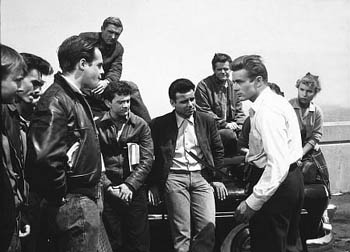
Rebel Without a Cause (teens, homoeroticism, "homosociality" and triangles)
Blue Velvet
For farce on the same theme:
The Miracle of Morgan’s Creek
Pillow Talk, The Thrill of It All, or Man’s Favorite Sport
Back to the Future (great Oedipal stuff there, a good place to cover Freud)
On sex and power:
The Apartment, Secretary, Some Like It Hot (as well as Sunset Blvd.)
On the film noir "myth" of repression, erotics, and violence:
Postman Always Rings Twice, Double Indemnity, Sunset Blvd.
Duel in the Sun / Lust in the Dust, Invasion of the Body Snatchers, Carrie, Psycho, Bonnie and Clyde, Scream (as pastiche)
Boys Don't Cry (with The Brandon Teena Story)
The "erotic thriller":Basic Instinct
How homoerotics is represented:
Top Gun, The Gay Deceivers, The Celluloid Closet, Poison, Postcards from America
Porno: Inside Deep Throat, with some interviews with Adult Stars and early porn; Pornography: The Secret History of Civilisation (British documentary)
Avant-garde: Trash, Curt McDowell shorts, Thundercrack!, Blow Job, Sins of the Fleshapoids, Scorpio Rising, Flaming Creatures, A Dirty Shame. I'm surprised and pleased at how much stuff I've got on this topic, so I want to do it right.
To establish differences between American and other ways of representing sex, I'm thinking about: The Dreamers, Last Tango in Paris, Belle de Jour, and Happy Together, but especially thinking of showing Y tu mama tambien or Law of Desire.
Some of these are pretty indispensable to me; the others I need a couple more weeks to mull over. I'm working on the readings now, and in some instances I may choose a film on the basis of whether I can find a good reading to go with it. I'm still thinking these over as possible required texts:
Warner, Michael. The Trouble with Normal
D’Emilio, John, and Estelle B. Freedman. Intimate Matters : A History of Sexuality in America
Dyer, Richard. Stars. McNair, Brian. Mediated Sex : Pornography and Postmodern Culture.
Money, John. Gay, Straight, and In-Between: The Sexology of Erotic Orientation
Poulson-Bryant, Scott. Hung : A Meditation on the Measure of Black Men in America.
There really isn't a reasonably short introduction to the critical study of film I can throw in, or I would. I have a lot of essays collected for reserve readings. That's it for now.
Wednesday, April 12, 2006

Ladies and gentlemen, I give you . . . Shorty!!!
Shorty used to be Chris Moukarbel's cat. Now she's ours.
She is, I think you can see, adorable.
She is also deep. The little wheels are always turning, the grey matter percolating.
Shorty has had an immediate and dramatic effect on the whole dynamic here.
If there were a novel about this household, I'm afraid it's clear who would be the central character.
Shorty--she's a cat and a half.
Tuesday, April 11, 2006
Bernard the Blue-Nosed Reindeer
I'm at St. Mary's--although it doesn't look like St. Mary's. I'm going to meet up with some people at a swimming hole; a young woman is giving me a ride. They seem to be the people I went to school with at Hopkins. In the water, I'm aware I'm wearing contacts and shouldn't get water in my eyes. I can see my own body from above, through the water; I'm impressed I can see the definition of my abs and pecs and think I'm really not far from having a good body. I'm naked; so are some of the other swimmers but not all. There are two young women wearing Mennonite or Amish caps wading in shallow water in full skirts. The water seems to be draining away, and now I'm not in a swimming hole but an artificial pool. The water is lower on one side than the other, as if it's tilted. When I stand on my head in the water, there's hardly enough water to cover my eyes and nose; I can still breathe through my mouth.
There's a black preacher handing out pamphlets. I shake my head and think that's the end of it, but he starts a religious service. The swimming pool is now a large room, like a gym. He's going to start reading from the New Testament; we all have copies in front of us. My copy is open to the Book of Jonah in parallel Hebrew and English. I say aloud, "I can read Hebrew," in a joking manner. One of the man's two young sons steps forward and reads aloud in Hebrew--not well, haltingly, but he reads it. Then he pipes up, "I can read Hebrew," just as I did.
The boy and his father produce some candies wrapped in colored foil. The boy places a blue one in my hand, then splays out the end of a red one and puts it on my nose. He looks at me, then removes the red candy from my nose and replaces it with a blue one and sings,
"Rudolph, with your nose so blue,
Who'd have thought you were a practicing Jew?"
March 18 2006
Saturday, April 08, 2006
My Mother is Dying Again
My mother is dying again. She is in her bedroom in the old house--the one that burned down in the '70s. She keeps falling out of bed and I have to lift her up and get her back into bed. I talk to Art about this: "She already died, didn't she? I mean, we buried her." He says, "Yeah, I didn't want to bring that up. I thought we did, but now I'm not sure."
At the same time, I've lost the car. But it also seems like it isn't me that lost it; it was borrowed by an older relative who lost it, Junior from The Sopranos or Sophia from Golden Girls, someone who's supposed to have senile dementia. So I have two things to discuss with Art, my dying mother and the lost car.
Back at the house, I ask my mother how it's possible for her to be here when she's already died. She becomes much younger suddenly. She has in her hand a black stone figurine that's supposed to be from ancient Mesopotamia and says she is never going away. She appears very happy about this but I am troubled; there's something supernatural about this that bothers me very much. A naked man appears in the doorway to the bedroom, looking very embarrasssed; a naked woman peeks over his shoulder behind him. "You wouldn't have any condoms, would you?" he asks. I say no; I'm irritated with him for interrupting. When I come out of my mother's room, he's sitting fully clothed in another bedroom, with another man seated in a chair near him. His name is Derrick but I call him Rick. I ask if he knows anything about possession. He says no, but the other guy starts to mumble, "I had a dream once . . ."
March 17 2006
Thursday, April 06, 2006

I go to some weird shit sometimes. Among the weirdest shit I've seen is Hot Feet, the Earth, Wind & Fire musical. I vaguely remember Earth, Wind & Fire as associated with the bad kind of disco, the kind that seemed to have very little to do with drugs or illicit sex.
Hot Feet appears to begin with the character Blossom from the late-80s TV show wandering through Taxi Driver. (There's a fine line between Jodie Foster and Mayim Bialik, really.) She runs into some creatures who have escaped from either The Lion King or Ionesco's Rhinoceros plus, I think, Debbie Allen in Dorothy's ruby slippers. The audience is enjoined to "boogie," which, I find to my surprise, is actually easier while seated than standing up--or maybe I'm doing it wrong--is it anything like Kegel exercises? After that, it's kind of a really bad version of The Red Shoes performed on the set of Fame, with a little bit of the Sparks notes for Faust and some Oedipus, or Iphigenia at Aulis, or something. And Soapdish, without the funny parts.
I used to dance (they gasp) and it's always a little weird for me to see the mythology of dance in recent popular entertainment. I get the dance-off thing, I get Footloose, but when did dance become a kind of desperate high-stakes struggle? Bob Fosse has a lot to answer for. Why do the unnatural, forced expressions of ecstasy on the dancers' faces seem to mask an implacable hostility toward the audience, and a profound despair at their condition in life? Dance is deep, deep, deep. My suggestion for a tagline: Hot Feet - Because Moulin Rouge went way over your heads.
I am waiting for the sequel: Hot Nuts.
Subscribe to:
Posts (Atom)


 Posts
Posts